Setting up IE Apps
Customers can develop and deploy their own apps, or buy ready-made apps and existing connectivity from the catalogue on the Marketplace. These apps from Siemens and Ecosystem partners work for more than 90 % of automation systems. IE Apps integrate object-oriented programming, databases, data layers, and artificial intelligence at the control level.
- Connectivity
- Data Management
- Analytics
- Security
- many more
   graph
    A[Buy IE App licenses on Industrial Edge Marketplace] --> B[Industrial Edge Hub lists purchased IE Apps]
    B --> C[Copy IE Apps from IE Hub to Industrial Edge Management]
    C --> D[Industrial Edge Management displays available IE Apps in the Catalog]
    D --> E[Use Industrial Edge Management to install IE Apps on IE Device]
    E --> F[Launch IE App on IE Device]
    style E color:#fffFF,stroke-dasharray: 5 5
Prerequisites for installing IE Apps
- You have ordered IE Hub access and signed in to IE Hub.
- You have configured your IEM instance.
- You have onboarded your IE Device.
- You have switched on your IE Device.
Required IE Apps
Independent from your individual use case, IE Devices need certain IE apps to structure field data into a usable format for use in other IE apps or solutions. Install the following IE apps for proper functionality:
- Common Configurator - Configures all connector apps
- Connector app - Fetches data from the IE device
- Ethernet IP Connector (optional and not included with the platform, suited for non SIEMENS PLCs)
- OPC UA Connector
- SIMATIC S7 Connector
- Other connector app suited to the IE Device and use case
- Databus - A general MQTT broker that makes the Connector data available to other IE apps on the IE Device. Available in Industrial Edge Hub by default.
- IIH Essentials - Database for the IE Device, stores data and creates asset model
The first 100 Datapoints (Attributes) for IHH are free of use.
Siemens recommends Flow Creator for debugging and testing.
Additionally, install Databus Configurator on the IEM instance.
Purchasing IE App licenses on the Marketplace
Buy ready-made apps, connectivity services, and other offerings from the Industrial Edge Marketplace.
- Open the Industrial Edge Marketplace. For customers located in China, use Marketplace China.
- In the top right corner, click "Login / Sign up". The Siemens Log In page opens.
- Log in with the user details for the IEM instance and IE Device you wish to equip. Click "Continue".
- You may see an Terms and Conditions page. Click the checkbox to confirm your agreement to the updated terms and conditions. Click "Confirm". The Marketplace home page opens.
- Search for the IE apps you wish to purchase. Add your preferred products to the cart.
- Complete the ordering process to add them to your IE Hub.
After a successful IE App purchase, Siemens Marketplace sends an email to the IE Hub admin, confirming that the apps have been provisioned to the IE Hub.
To check whether the purchase was successful in your IE Hub:
- Log in to IE Hub.
-
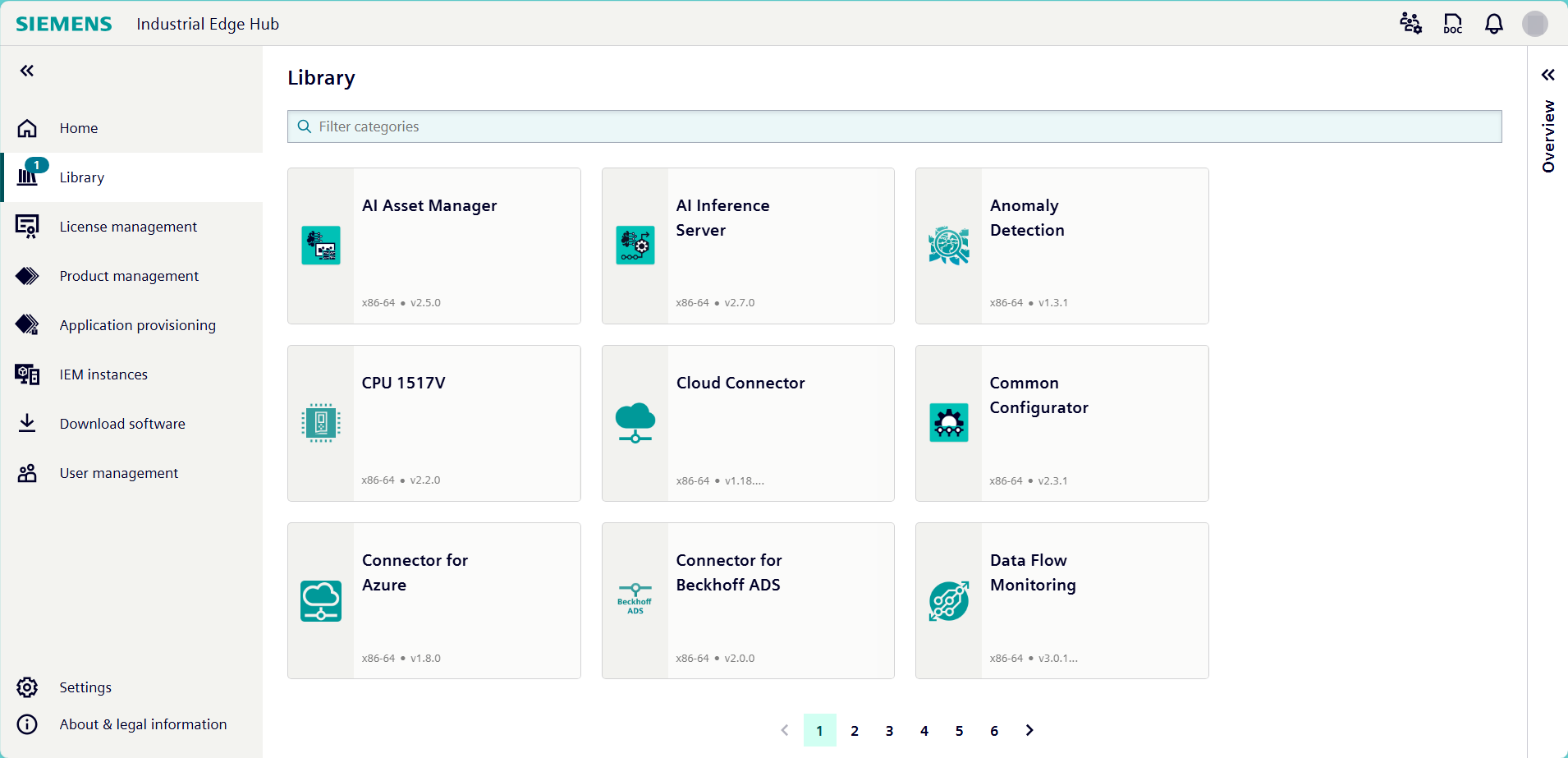
Click "Library" from the left navigation pane. The "Library" page opens, displaying tiles of available IE apps.
Installing an IE App on an IE Device
Once you have purchased an IE App from the Marketplace, install it on an IE Device. The process for installing an IE App remains the same for all configurations of Industrial Edge Management and both physical and virtual IE Devices.
- Copy the IE app from the IE Hub to the IEM catalog.
- Install the IE App from the IEM catalog to the IE Device.
- Launch the IE App on the IE Device.
- Configure the IE App Databus as needed.
The video below guides you step-by-step through the process of installing apps on an IE Device.
Copying an IE App from the IE Hub to the IEM catalog
After purchasing an IE App license, Siemens Marketplace automatically distributes the IE App to the Industrial Edge Hub associated with the purchasing account. To install an IE App on an IE Device, first copy the IE App from IE Hub to the Industrial Edge Management catalog.
- Log in to IE Hub.
-
Click "Library" from the left navigation pane. The "Library" page opens, displaying tiles of available IE Apps.
-
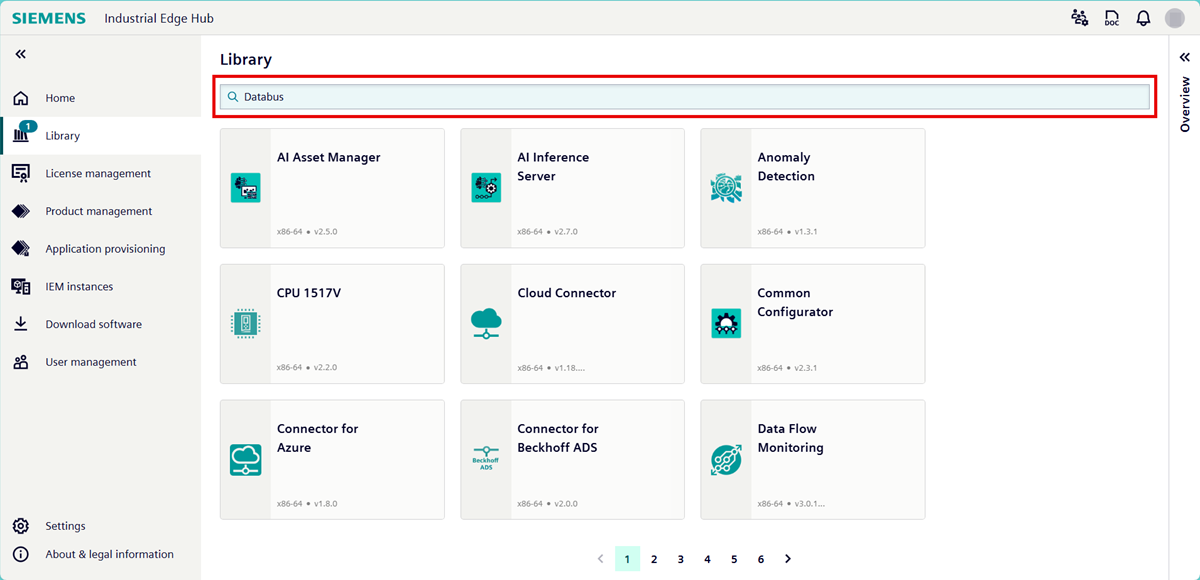
Use the search bar or filter to find the IE App you want to copy to the IEM instance.
-
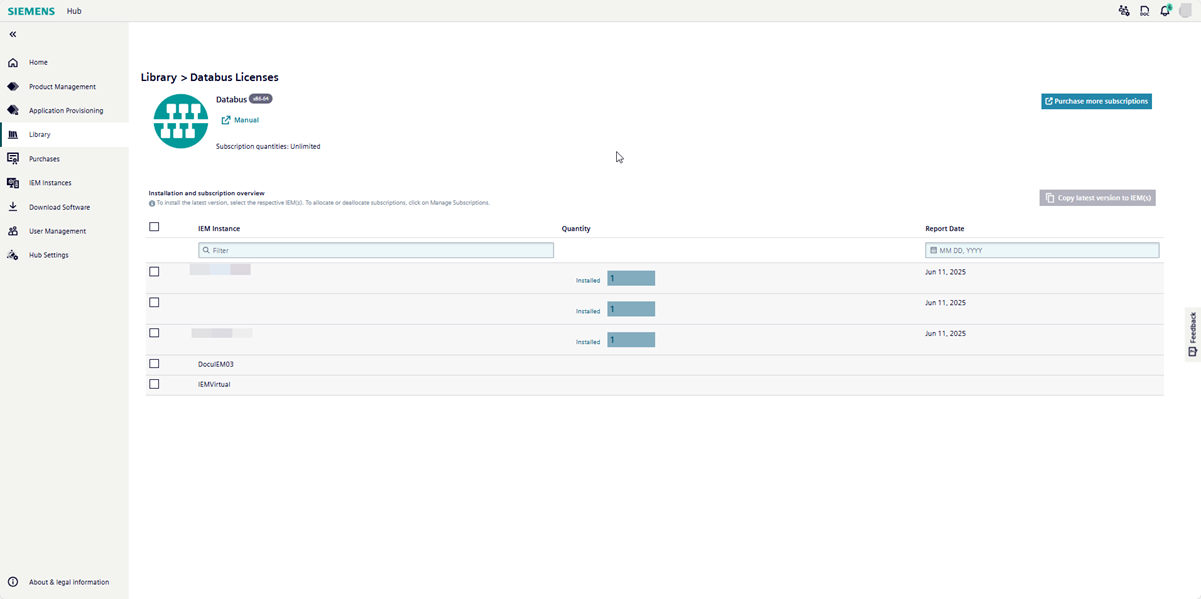
Click on the tile of the IE App you want to copy. The IE App product details page opens, listing all IEM instances connected to the IE Hub.
-
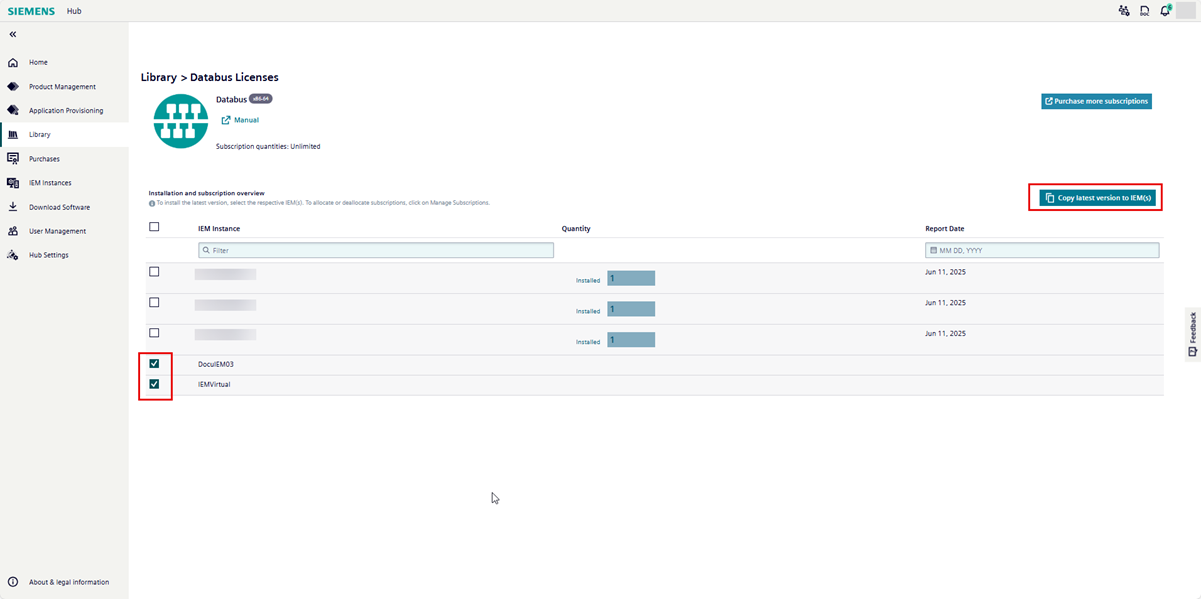
Select the instance using the check box on the left.
-
Click "Copy latest version to IEM".
-
Click "Copy" to confirm.
- Repeat steps 2–7 for each IE App you wish to copy to the IEM instance.
To check if the apps apps have been successfully copied to your IEM:
- Log in to IEM.
-
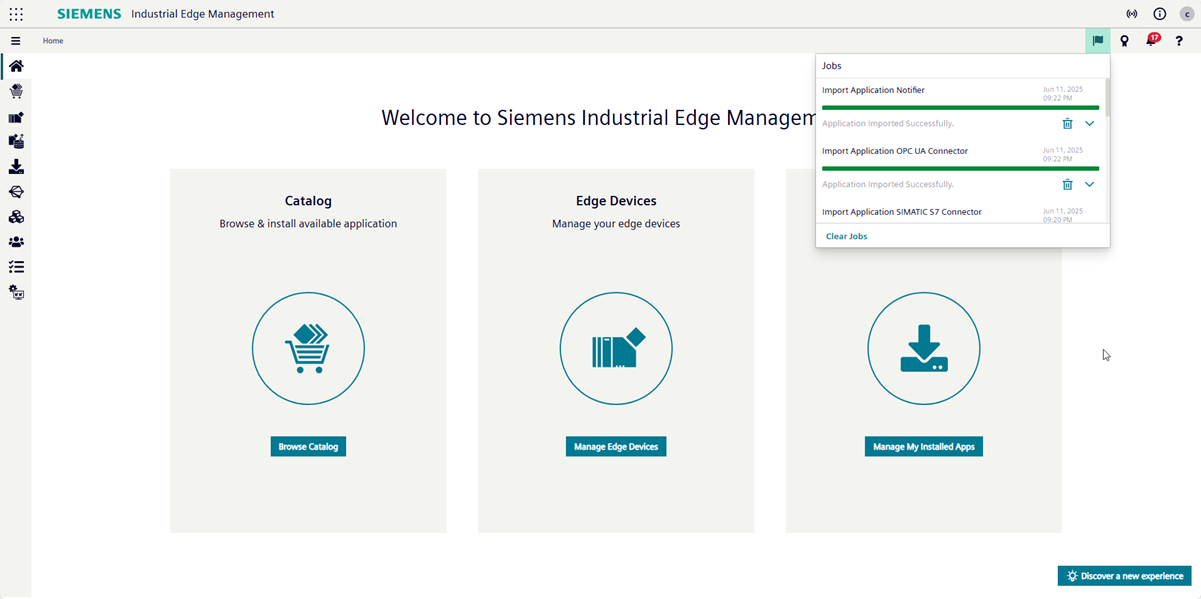
Click the "Job Status" flag in the top right corner. A list displays the copy progress for each IE App.
NOTE
IE App installation time depends on your Internet speed and network configuration.
IEM lists the IE Apps in the "Catalog" when the upload completes.
Installing an IE app from the IEM catalog to an IE Device
After copying an IE App to an IEM catalog, install the IE App on the IE Device. This process is the same for IEM Cloud, IEM Virtual, and IEM Pro.
- Log in to IEM.
-
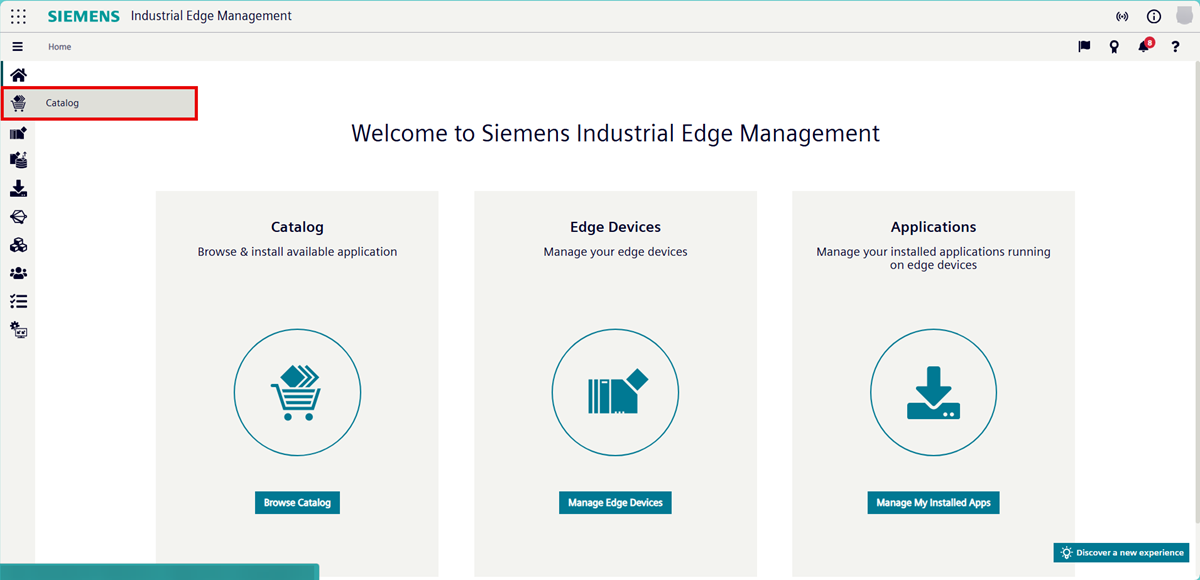
Click "Catalog" from the left navigation pane. The "Catalog" page opens, displaying tiles of available IE Apps.
-
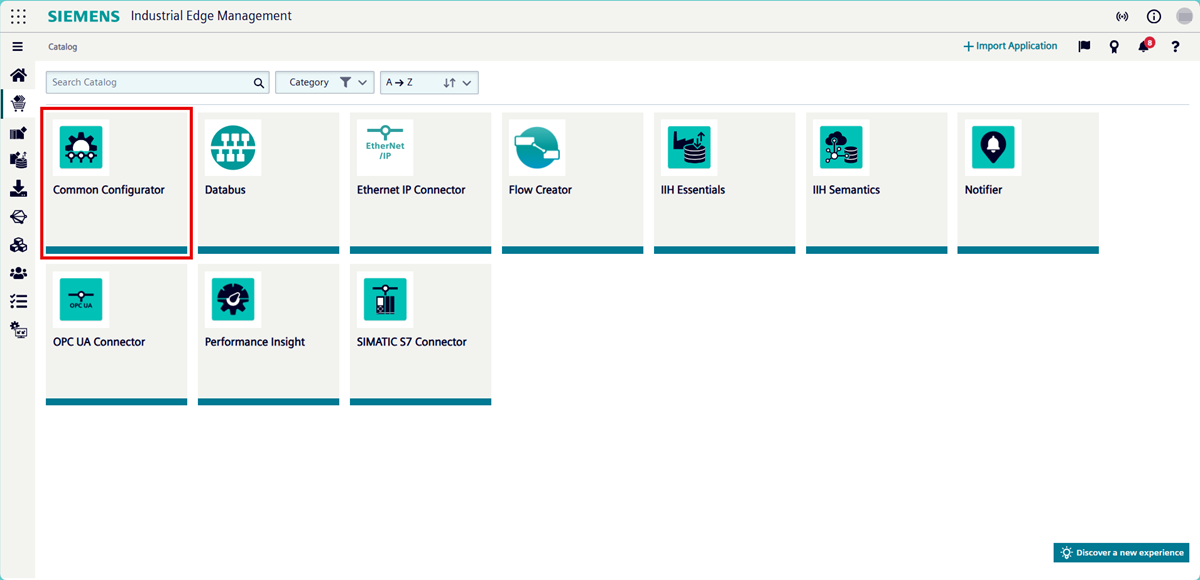
Click the tile for the IE App you wish to install. The IE App details page opens.
-
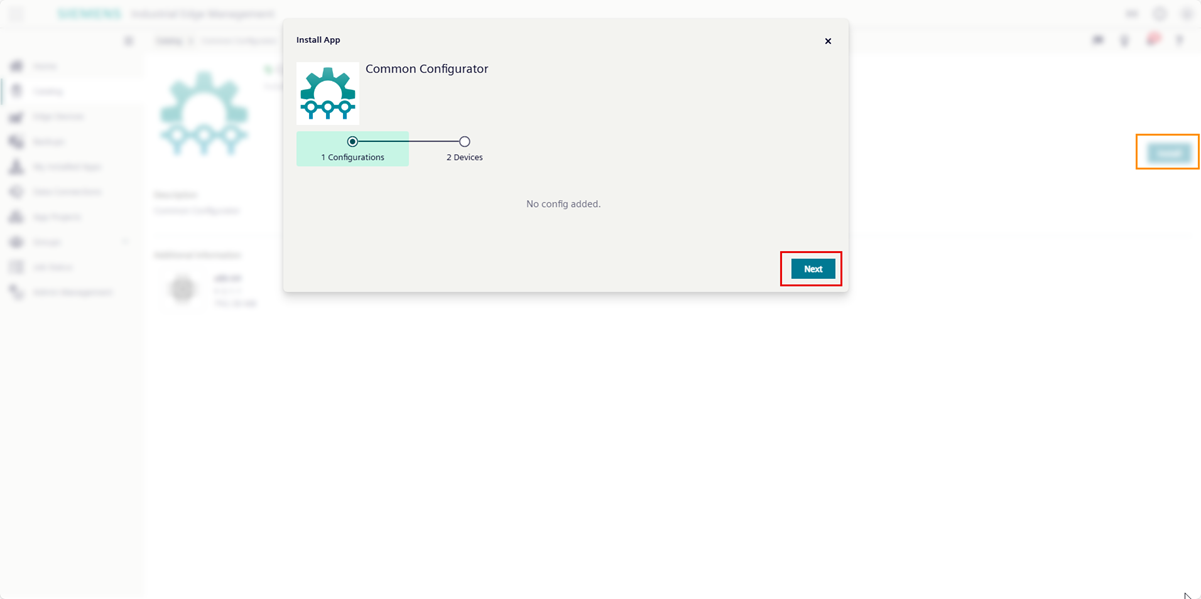
Click "Install". The "Install App" pop-up opens.
-
If you wish to add a configuration file, upload it here and click "Next". If not, click "Next".
-
Click the checkbox to select the IE Device. Click "Install now". IEM installs the IE App on the IE Device.
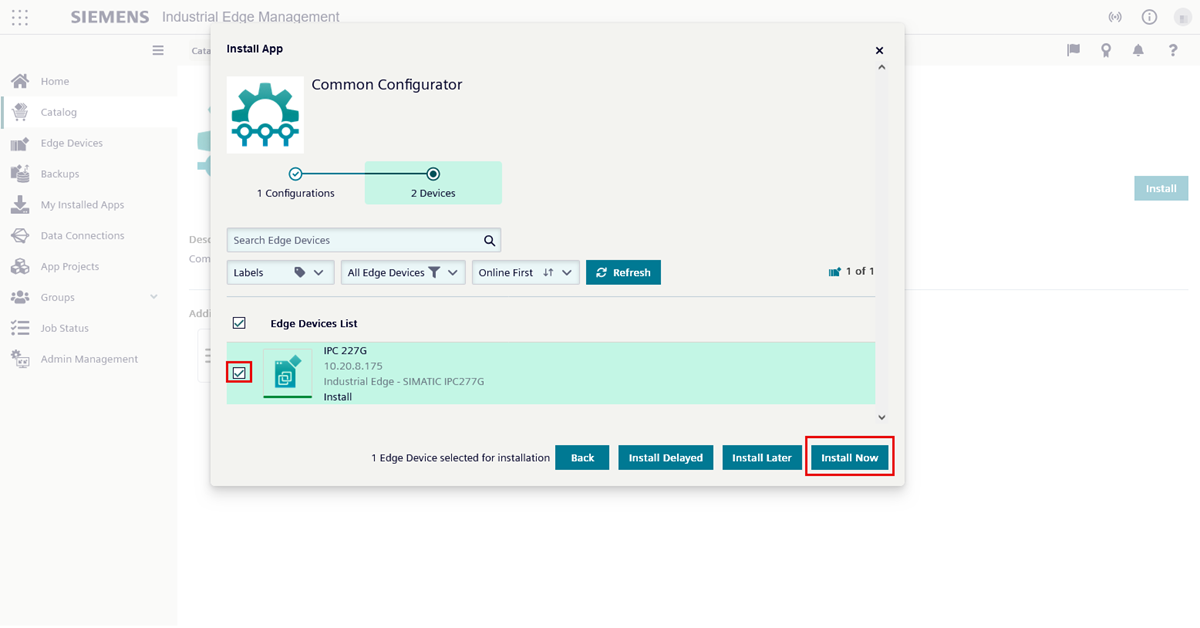
-
Click the "Job Status" flag in the top right corner. A list displays the installation progress for each IE App.
- Repeat steps 2–7 for each IE App you wish to copy to the IE Device.
-
To verify that all IE Apps installed successfully on the IE Device, click "My Installed Apps" from the left navigation pane. The "My Installed Apps" page opens, displaying tiles of installed IE Apps on IE Devices.
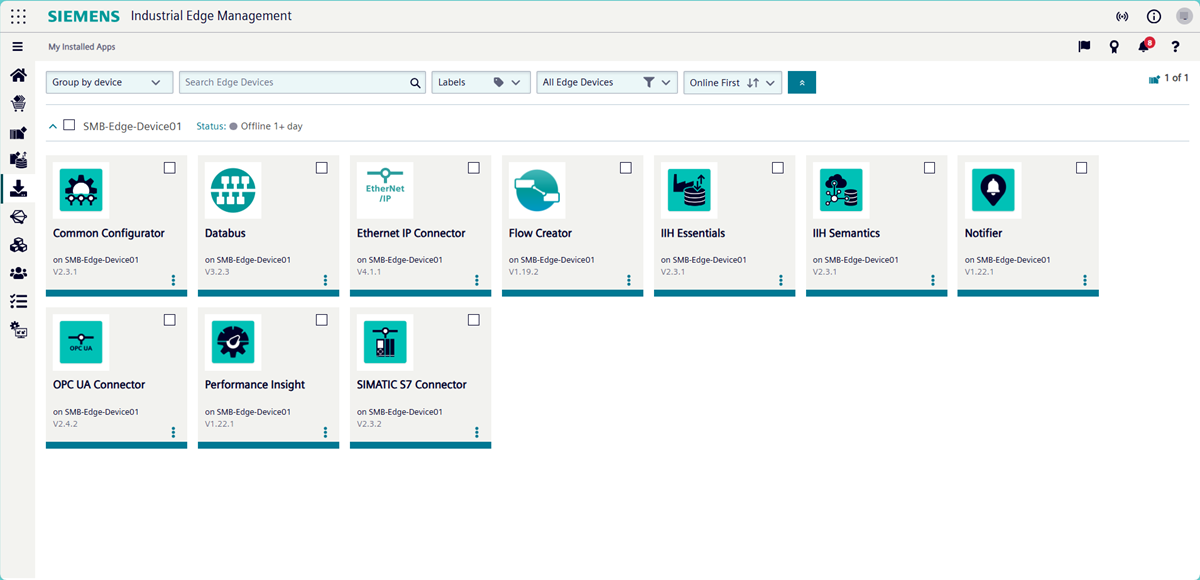
Launching an IE App on your IE Device
After installing an IE App on an IE Device, log in to the device UI to launch.
- Open the web browser on your local computer.
- Enter the IP address of the IE Device with the HTTPS protocol, i.e.
https://<ip address>. The screen displays the IE Device UI login screen. - Log in to the Device UI.
- Click "Apps" from the left navigation pane. The "Apps" page opens.
- Click on the tile of the IE App you wish to launch. The selected IE App launches in a new tab.
Installing management IE Apps
Some IE Apps cannot be configured on an IE Device and must be configured directly in the IEM instance. Install management apps on IEM to directly configure these IE Apps. Management apps such as Databus Configurator allow the IEM to communicate with the IE App on the IE Device and allow the user to transfer certain configurations to different apps.
Installing Databus Configurator
Databus Configurator runs in your IEM. It provides a user interface which gives you an overview of the Databus-specific details of the corresponding IE Device. Refer to the Databus documentation for more information.
To install a management app:
- Log in to IEM.
-
Click "Discover a new experience". The beta user interface of IEM opens.
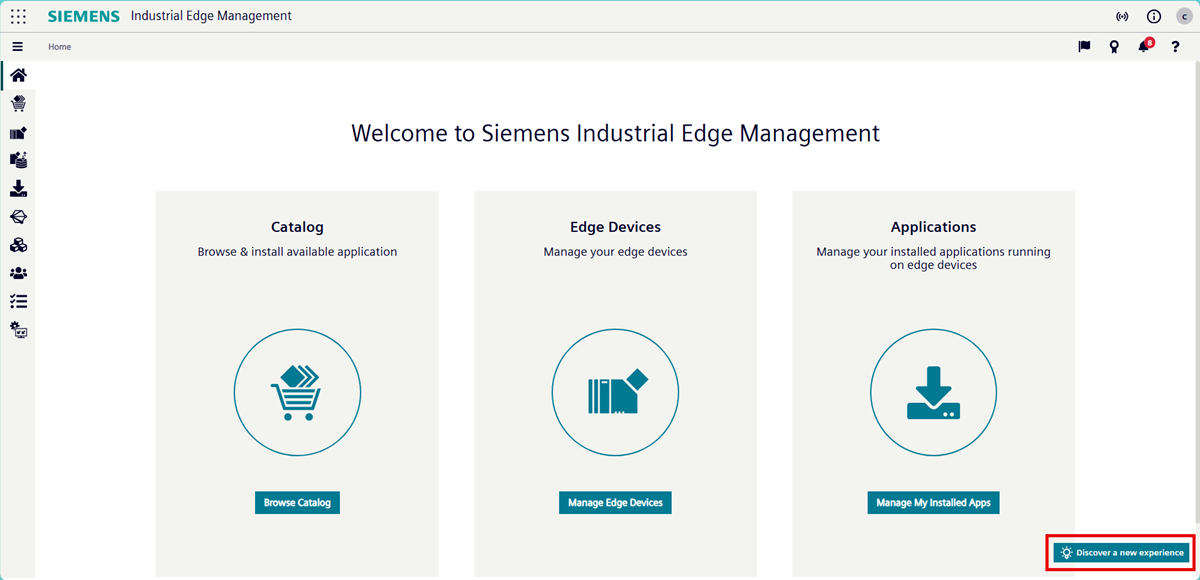
NOTE
"Discover a new experience" opens the beta user interface of IEM. This interface does not support all features, which is why this guide will only implement the next step there and then switch back to the previous design.
-
Confirm the selection.
-
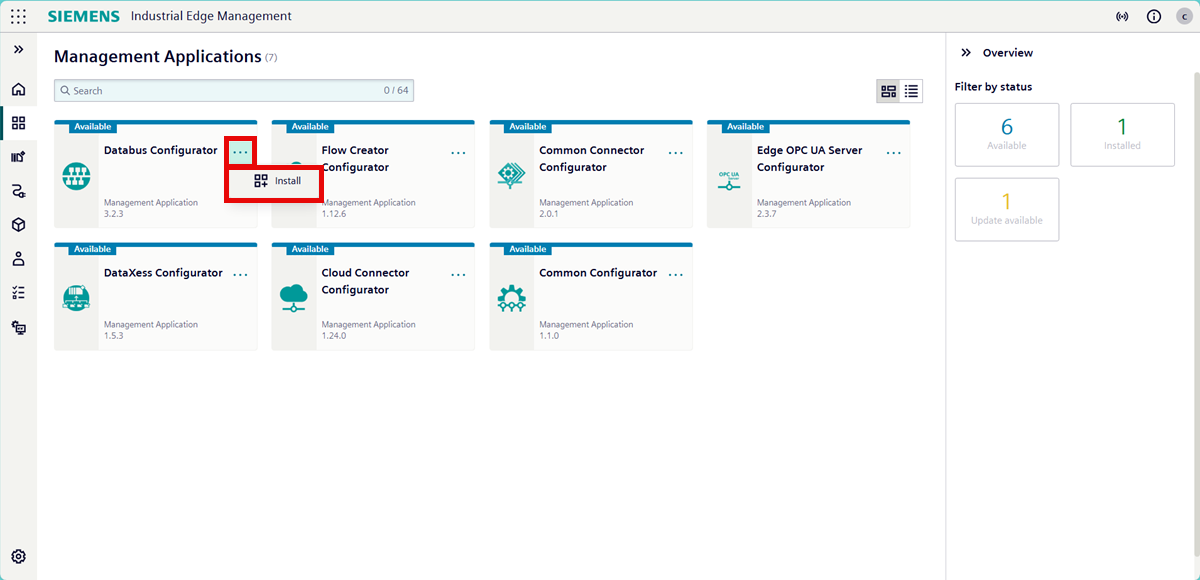
Click "Applications" > "Management" from the left navigation pane. The "Management Applications" page opens, displaying tiles of available management IE Apps.
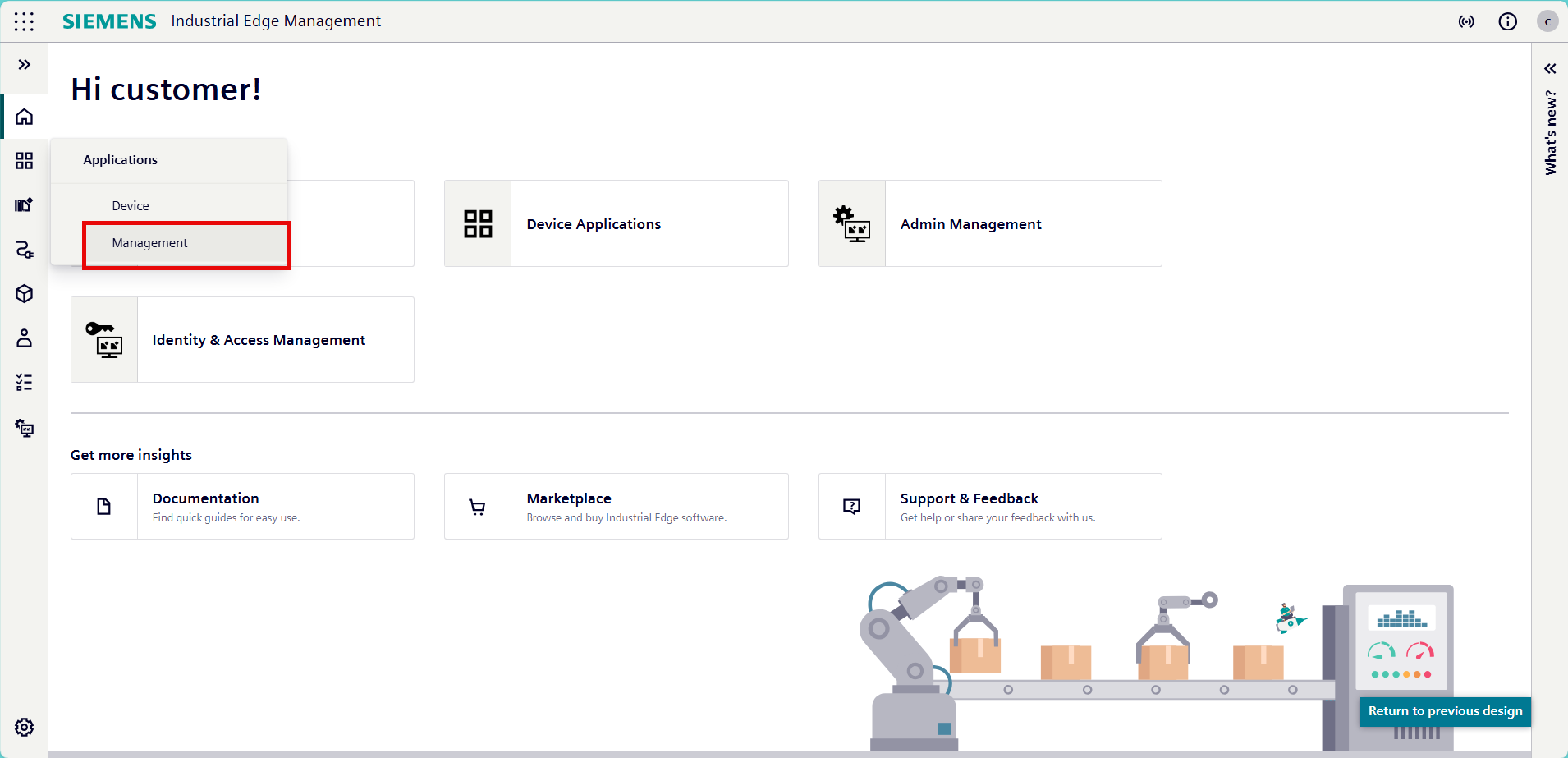
-
Click the "..." button in the "Databus Configurator" tile. A list appears.
-
Click "Install". A popup in the bottom right appears confirming that IEM is installing Databus Configurator.
-
To return to the old user interface, click "Home" from the left navigation pane. The "Home" page opens.
- Click "Return to previous design". A pop-up appears. Click "Return to previous design" again.
The Databus Configurator does not have an extra user interface. To check if installation was successful, proceed with Launching Databus on IEM.
Launching Databus Configurator on IEM
Databus is an MQTT broker that is responsible for distributing information from connectors between IE Apps on an IE Device. Install Databus Configurator on IEM before configuring Databus on the IE Device. Certain requirements for security and access rights in communication must be met.
- Log in to IEM.
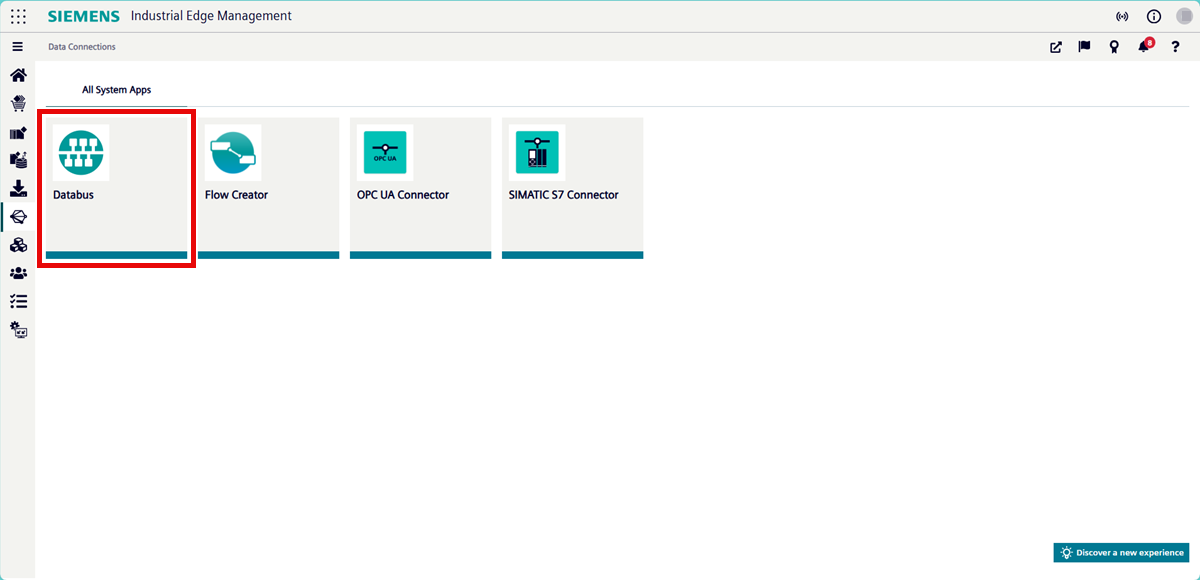
- Click "Data Connections" from the left navigation pane. The "Data Connections" page opens.
-
Click the "Databus" tile. The "Launch App" pop-up appears.
-
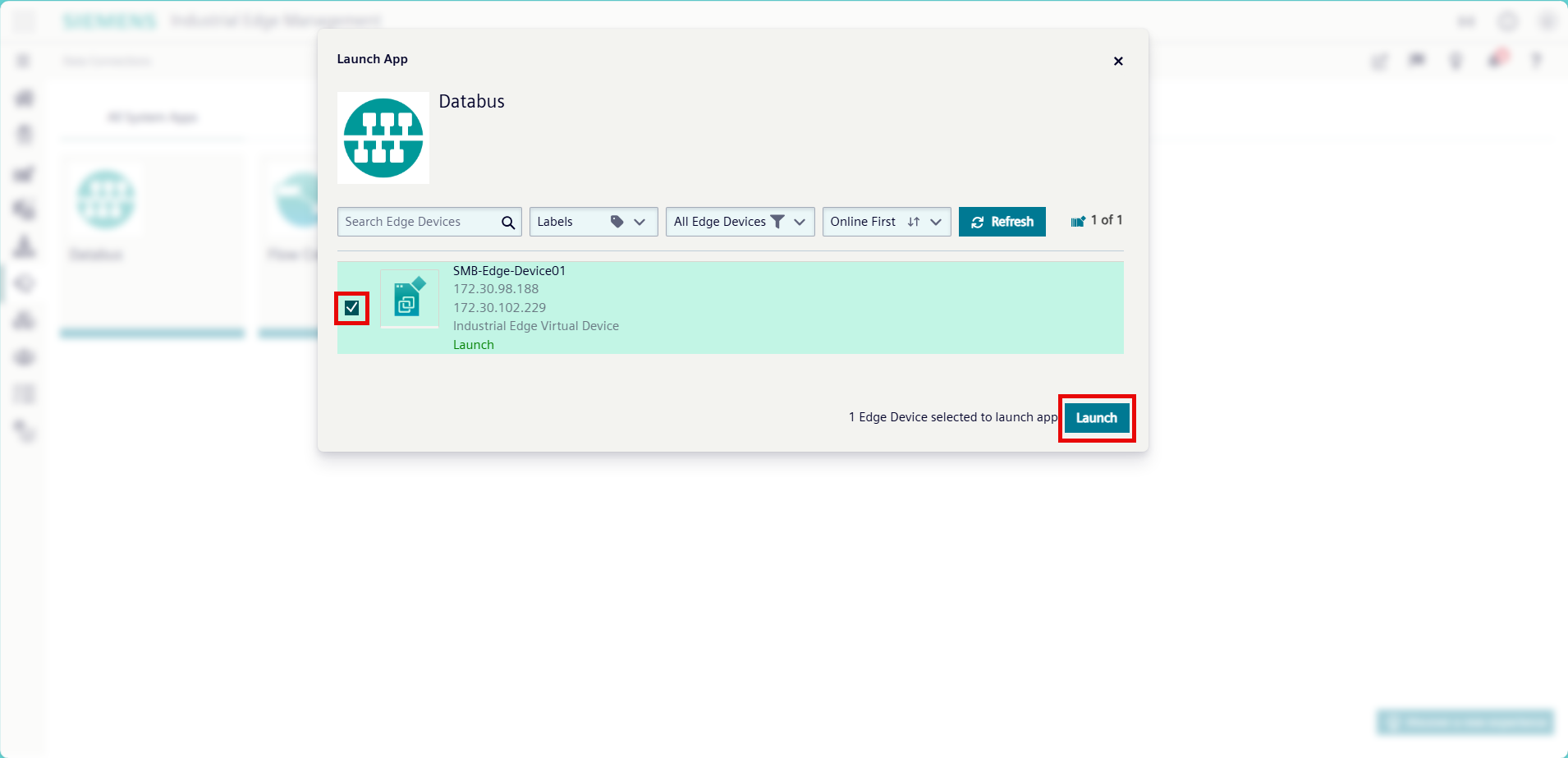
Click the checkbox next to the IE Device you wish to launch Databus on.
-
Click "Launch". The Databus Configurator UI opens in a new tab.
Adding users and topics to the Databus to manage access rights
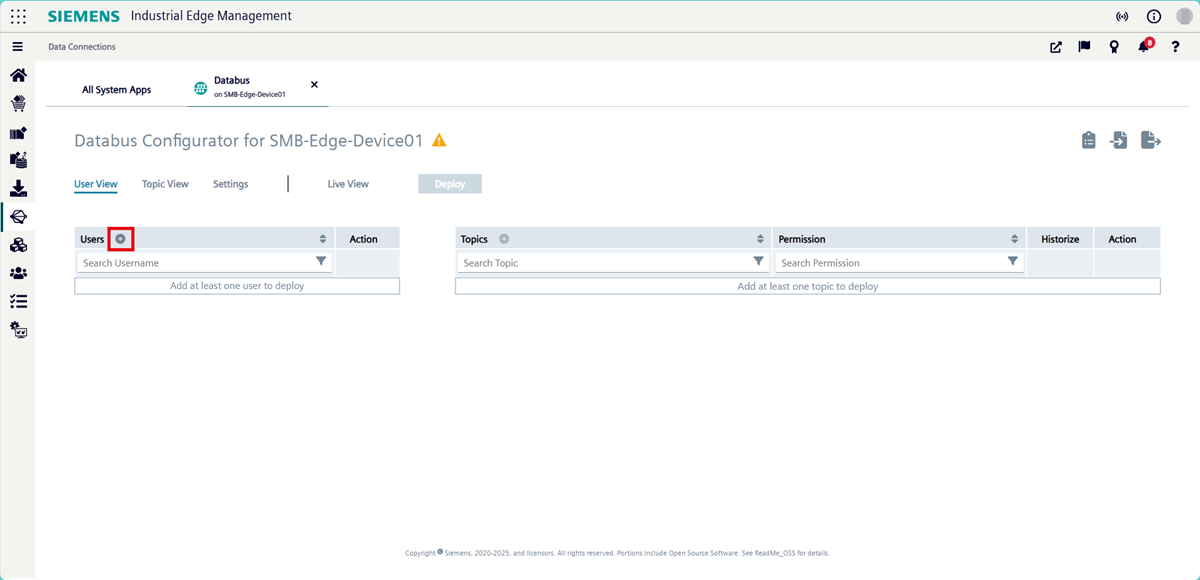
After launching Databus in IEM, add users in the Databus Configurator and provide the necessary access rights to a Databus topic for the corresponding IE Device. If you want to grant access to the Databus data to an IE App, add the IE App user to the Databus user list along with the corresponding topics and access permissions.
To add a new user:
- Launch Databus on IEM.
-
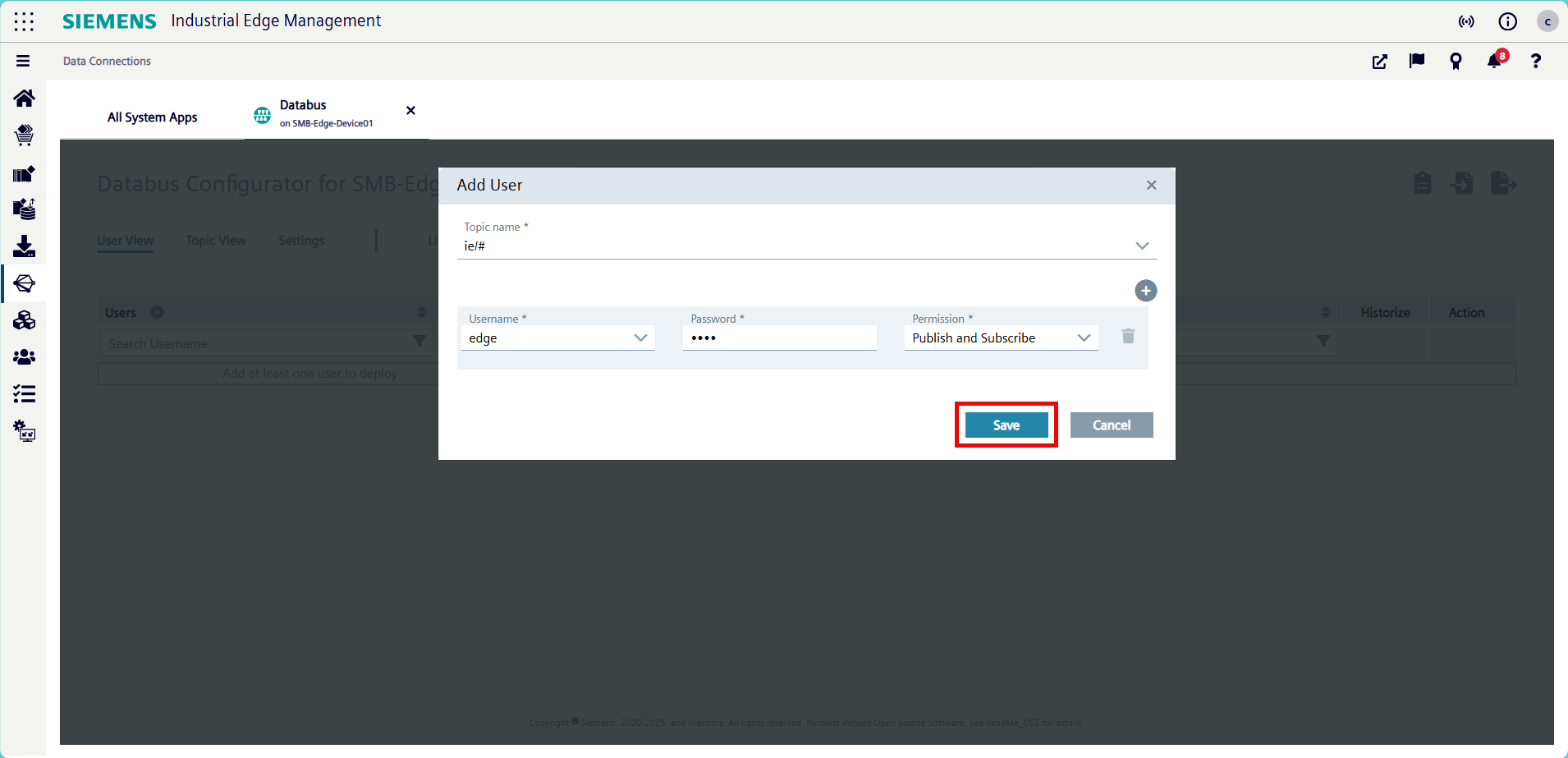
Click the "+" icon next to "Users". The "Add User" pop-up appears.
-
Create a user with the following case-sensitive credentials:
- Topic Name:
ie/# - Username:
edge - Password:
edge - Permission: Publish and Subscribe
- Topic Name:
-
Click on "Save".
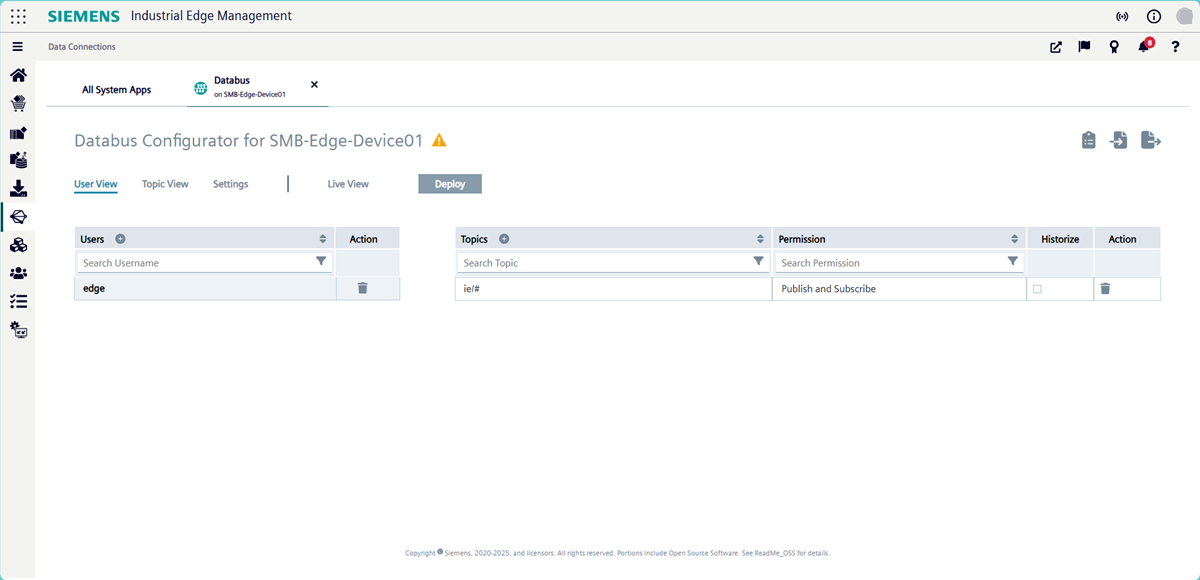
Now you will be able to see the newly added user. Under "Users" there is now a user named "edge" and under "Topics" there is a topic called "ie/#" with publishing and subscription rights as highlighted in the figure below.
-
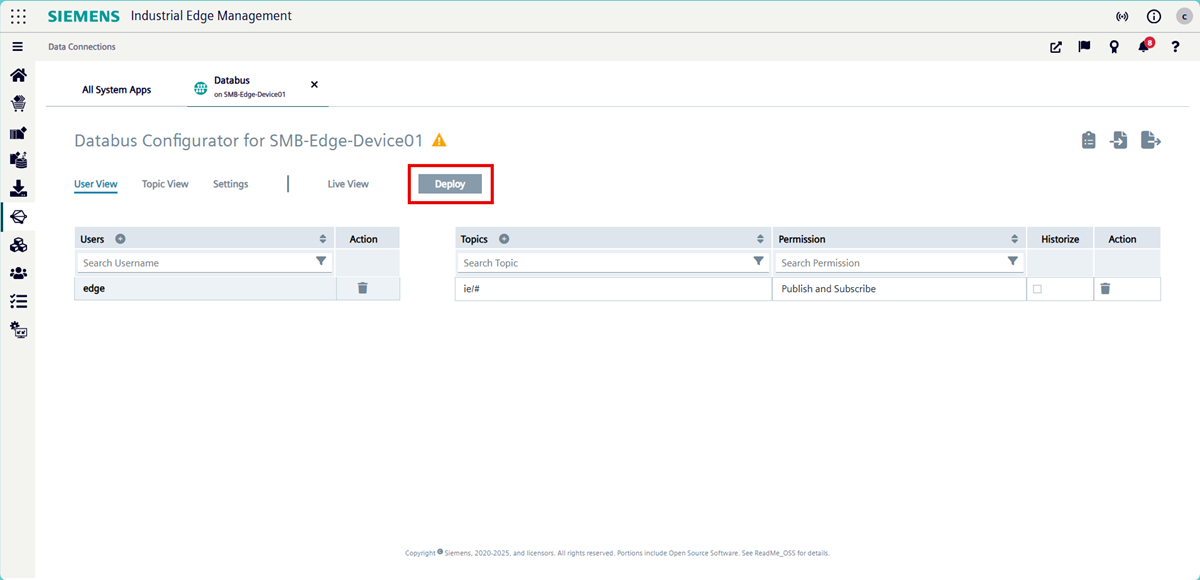
To load these configurations onto your IE Device, click "Deploy".
Validating the outcome
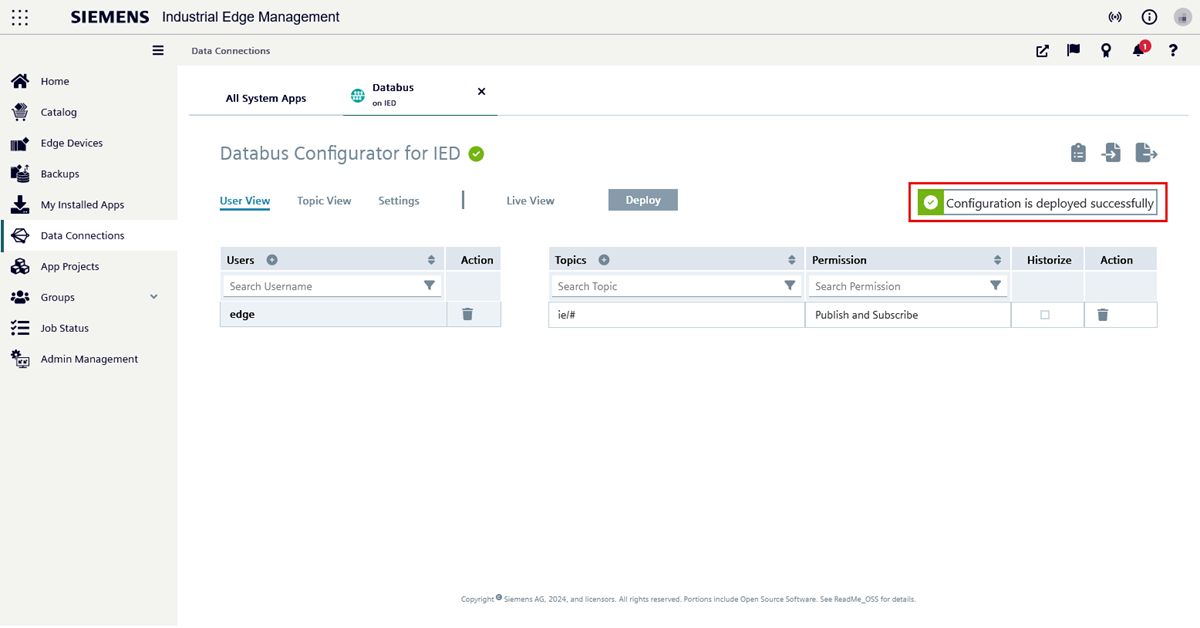
It takes about a minute for the deployment process to fully complete. Once the deployment is complete, you will see a notification confirming the successful deployment.
What's next?
Proceed to Setting up IE Connectors.