Setting up IE Devices
Industrial Edge Devices (IE Devices) are physical or virtual devices operating at the field level. IE Devices record data generated by automation systems, store the automation data locally, and upload it any cloud-infrastructure of the customer's choice such as Insights Hub, AWS, or Azure as well as local data lakes. Later we will also learn how to deploy and run apps on the IE Device.
Choosing your Industrial Edge Device
Siemens offers physical and virtual IE Devices to facilitate Edge computing in production environments.
Find a full overview of devices compatible with Siemens Industrial Edge here. Refer to the Industrial Edge Device documentation for more information about a specific IE Device.
Ensure your chosen IE Device is compatible with your desired IE Connector Apps and connectivity protocols.
Onboarding process
IE Devices must be onboarded to an Industrial Edge Management (IEM) instance. IE Devices cannot be onboarded to more than one IEM instance.
The onboarding process connects IE Devices to the IEM instance and configures settings, e.g. device type, login credentials, etc. First create a device configuration file to define settings for the IE Device in IEM and save the configuration file on a local computer. Use the configuration file to activate and onboard the IE Device. This connection is initiated by the IE Device and is outbound from the secure network—avoiding any inbound connections. Allowing the IEM to initiate inbound connections would increase the attack surface and create a security risk.
Physical IE Devices and virtual IE Devices are designed for different use cases. However, both require a configuration file for the onboarding process.
The steps to configure and onboard an IE Device depend on the chosen hardware.
- To onboard a physical IE Device, proceed to Onboarding a physical Industrial Edge Device.
- To onboard a virtual IE Device, proceed to Onboarding an Industrial Edge virtual Device.
Onboarding a physical Industrial Edge Device
Physical IE Devices process data locally in industrial automation environments. Physically located near the automation equipment such as sensors, controllers, and gateways that collect and analyze data locally.
This tutorial uses the SIMATIC IPC 227G to illustrate how to onboard a physical IE Device.
Prerequisites for onboarding a physical IE Device
Software requirements
- You have IE Hub Access.
- You have configured your IEM.
- An existing network setup
- IP plan ready (static or static through DHCP)
- Recommendations:
- Use a provided DNS server for name resolution.
- Use a provided NTP server for time synchronization.
Hardware requirements
- IE Device
Connecting the physical IE Device
The IE Device requires network access to connect to the Industrial Edge Management instance. For an IEM Virtual deployment, ensure the IE Device can reach the IEM. For IEM Cloud, ensure the IE Device has internet access to reach the cloud IEM.
- Plug an Ethernet cable into the IPC's port.
- Establish an IEM to IE Device connection
- Connect a screen to the IE Device.
- Turn on the IE Device.
-
When the IE Device finishes booting up, the screen displays the IE Device's IP address. Note down the IP address. The DHCP on your network determines the IP address. If no IP Address is showing, you might not have a DHCP Server available. In this case refer to our static IP Address onboarding via Stick.

-
Establish connectivity between your local computer, the IEM and IE Device to reach the UIs from your computer.
Creating the configuration file for a physical IE Device
IE Devices require a configuration file from the Industrial Edge Management instance for the onboarding process. This procedure is similar for IEM Cloud, IEM Virtual, and IEM Pro.
- On the local computer's internet browser, open Industrial Edge Management.
- If required, log in.
-
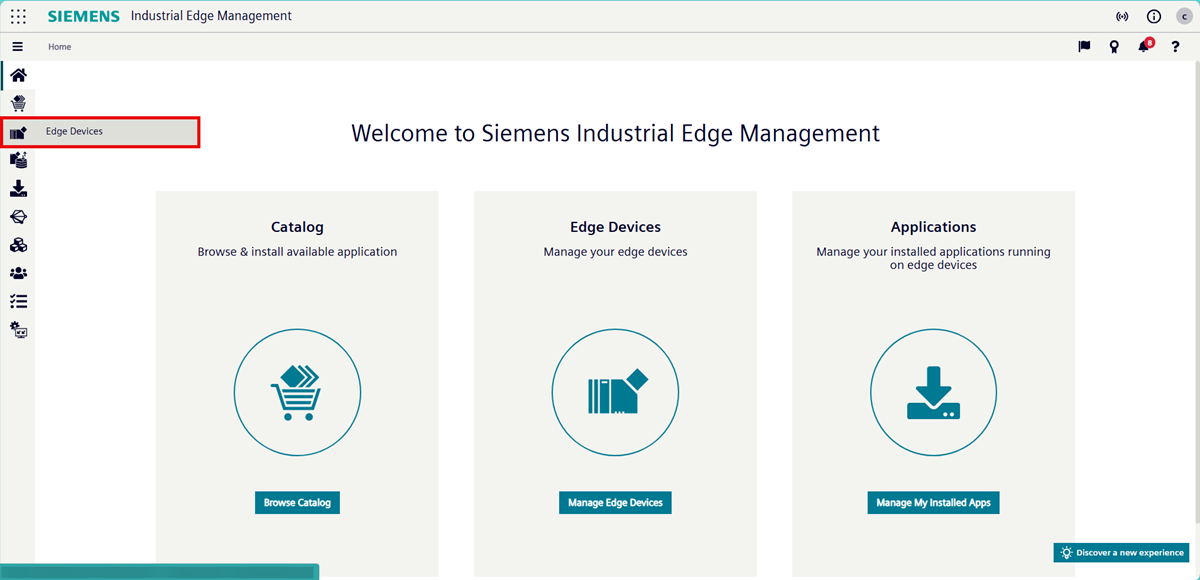
In the left navigation panel, click "Edge Devices". The "Edge Devices" page opens.
-
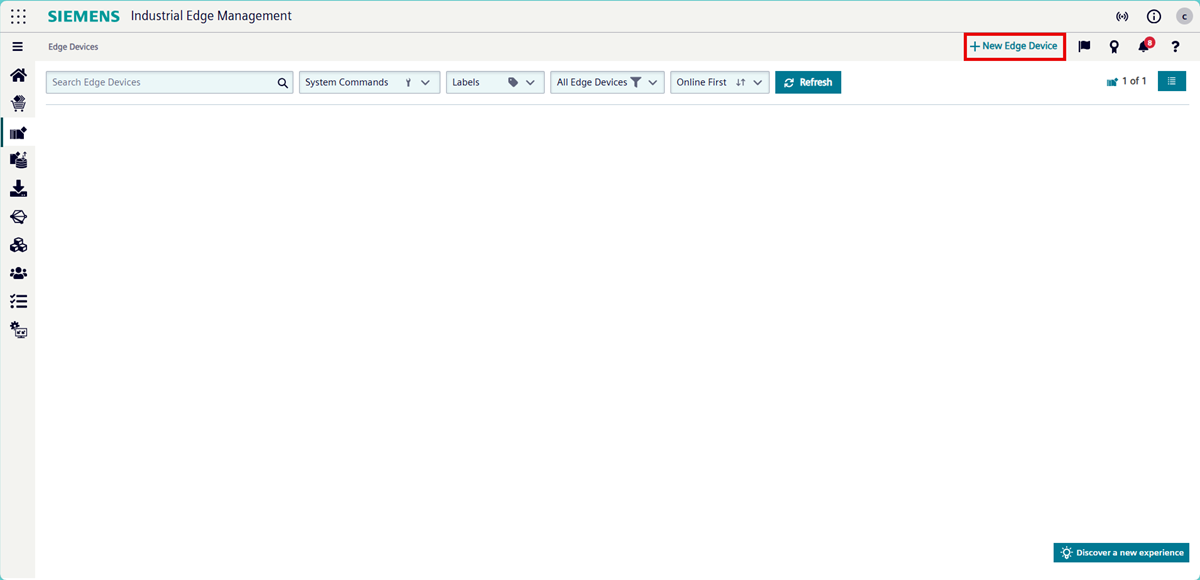
Click "+ New Edge Device". The "New Edge Device" pop-up opens.
-
Define the following information:
Field Input IE Device Type Select the corresponding device type from the drop-down list. IE Device Name Enter a unique device name.
The device name must be 3–64 characters long and may only contain alphanumeric characters and.,+,-and_.IE Device Username (Email) Enter the email address that should be used to log in to the device. IE Device Password Enter the password that should be used to log in to the device.
Password must be at least 8 characters long and contain at least one capital letter, special character, and number.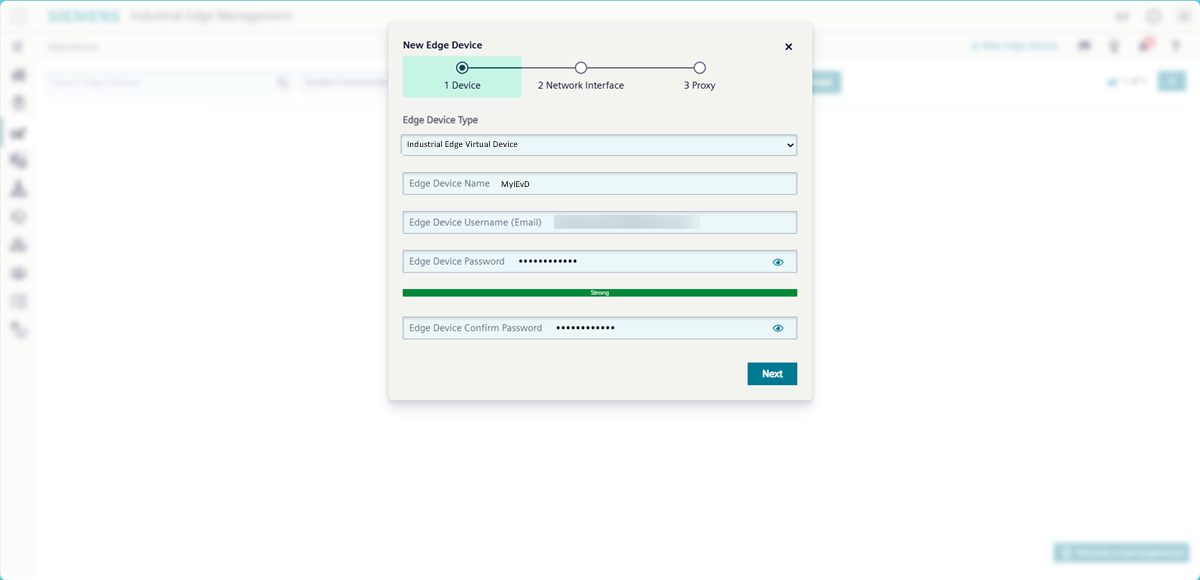
Credentials cannot be recovered
Note down the credentials or store them in a password manager.
-
Click "Next". The "Network Interface" page opens.
- The "Network Interface" page opens. For DHCP, no interface must be added. If you want to use a static ip address, add an interface.
-
The network configuration includes setting a Network Time Protocol (NTP) server. The NTP server is responsible for time synchronization. In the NTP Server (Optional) field, enter your network's NTP server or use a public NTP server such as
pool.ntp.org. Click the "+" button. Once done, click "Next". The "Proxy" page opens.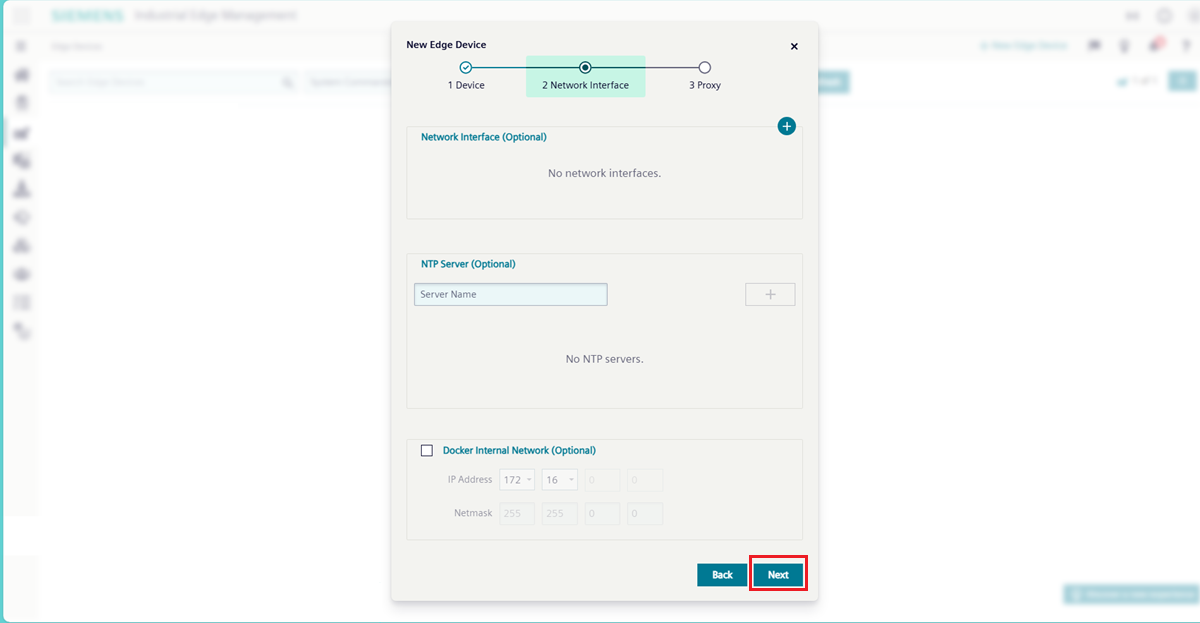
-
If needed, specify the configuration for your proxy. If you do not have a proxy, leave the fields blank.
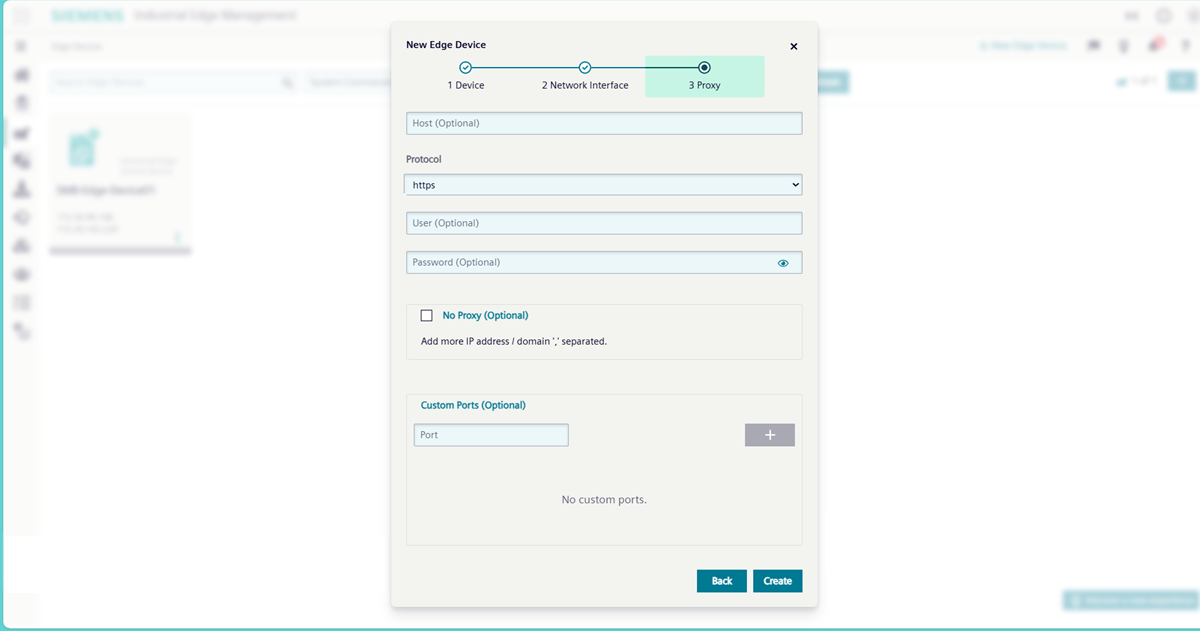
-
Click "Create". The configuration file downloads according to your browser settings. The configuration file follows the naming convention of
device-<deviceID>.Valid for one hour
The configuration file is per default only valid for one hour. After one hour, the file corrupts and you must download a new configuration file.
-
The "New Edge Device" pop-up closes and IEM displays the "Edge Devices" page with the new IE Device listed.
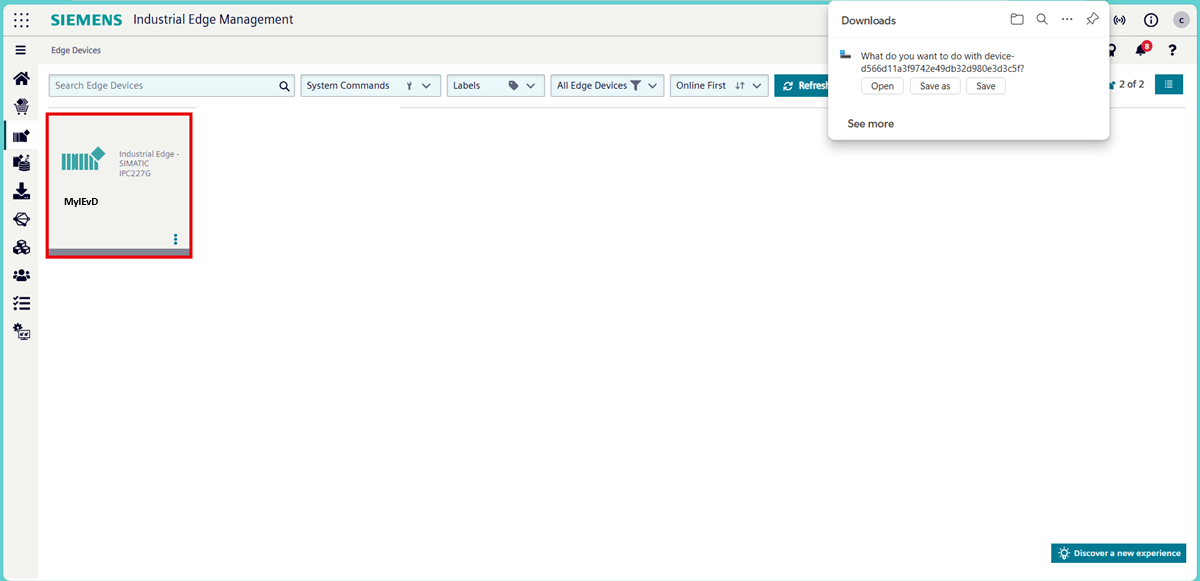
Once the configuration file downloads, proceed directly to onboard the IE device in one of the following ways:
Siemens recommends onboarding via the IE Device UI for convenience and a speedier onboarding process.
Onboarding a physical IE Device via the web browser
- Open the web browser on your local computer.
-
Enter the IP address of the IE Device with the HTTPS protocol, i.e.
https://<ip address>. The browser may display the "Your connection isn't private" warning page as the IE Device uses a self-signed certificates for the UI.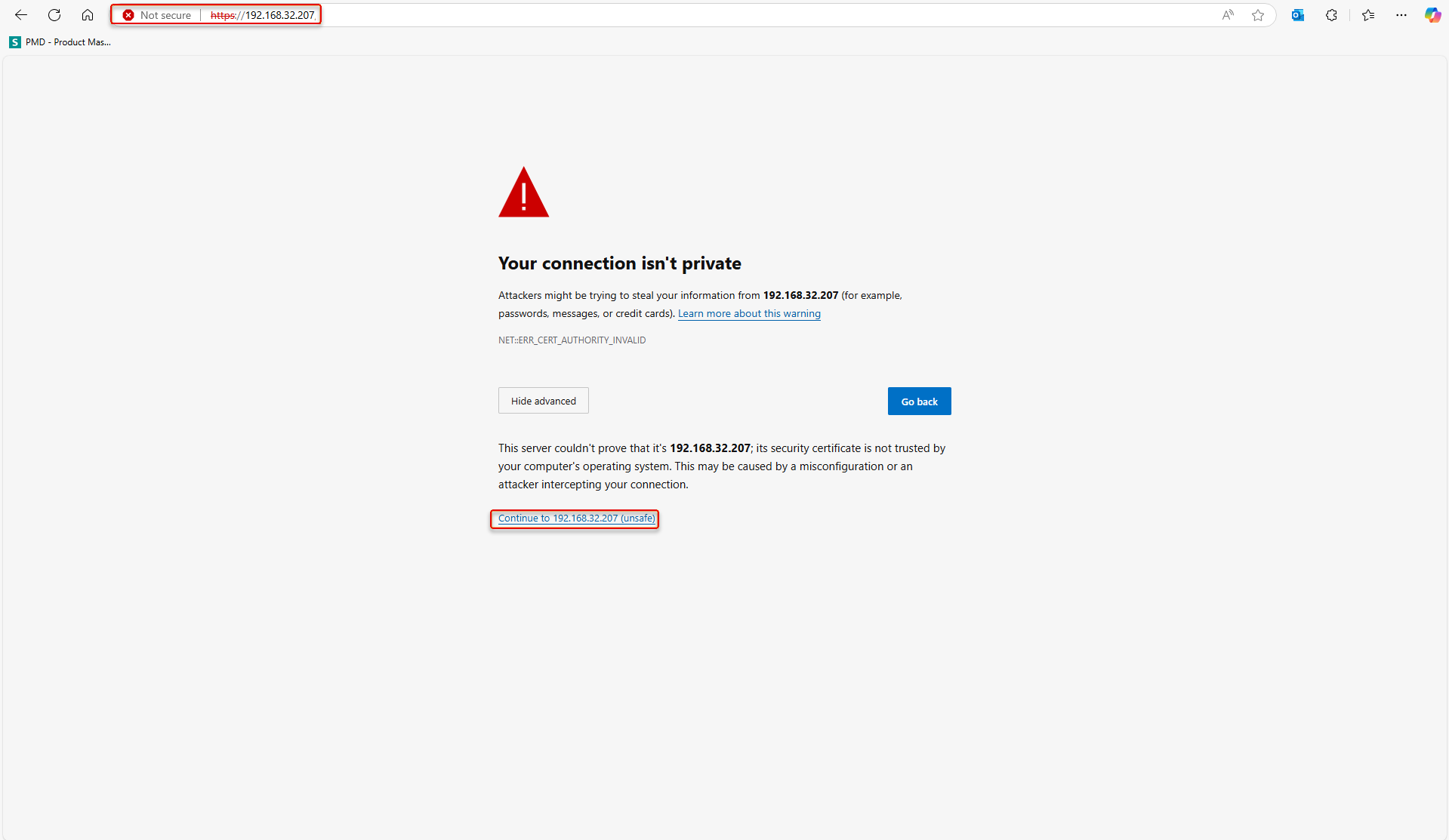
-
Click "Advanced". The screen displays a warning about the server's security certificate.
- Click "Continue to XXX.XXX.XX.XXX (unsafe)". The IE Device UI displays the "Activate Edge Device" page.
-
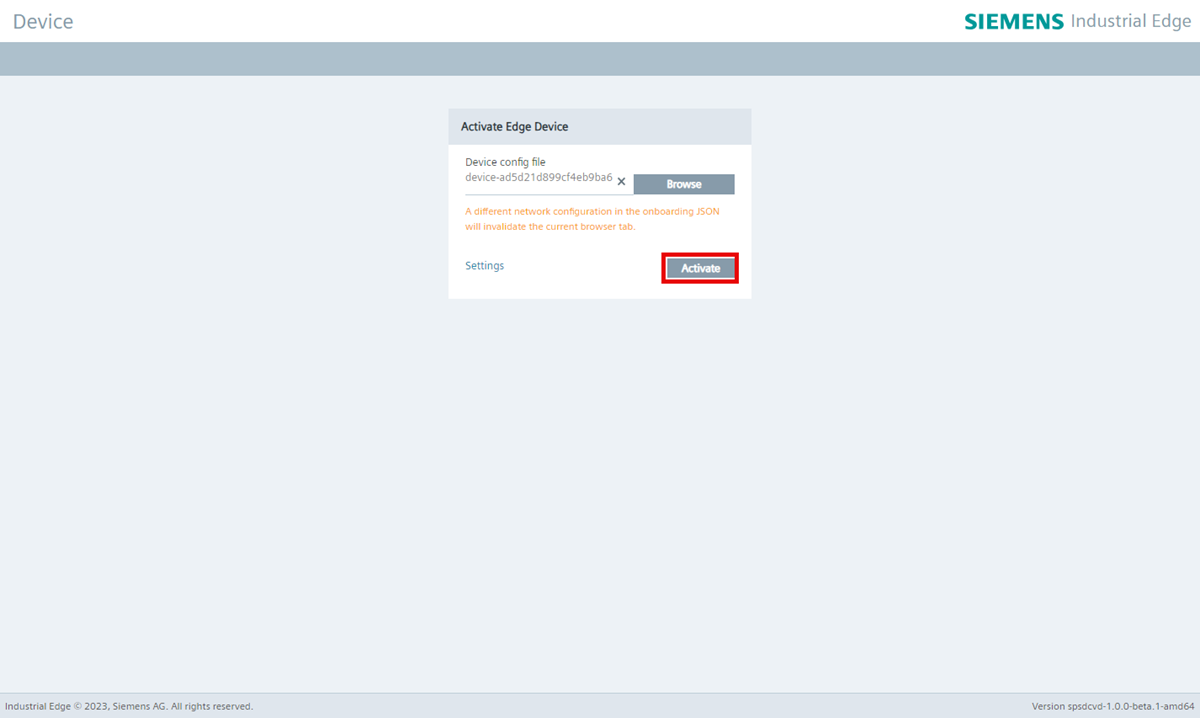
Click "Browse".
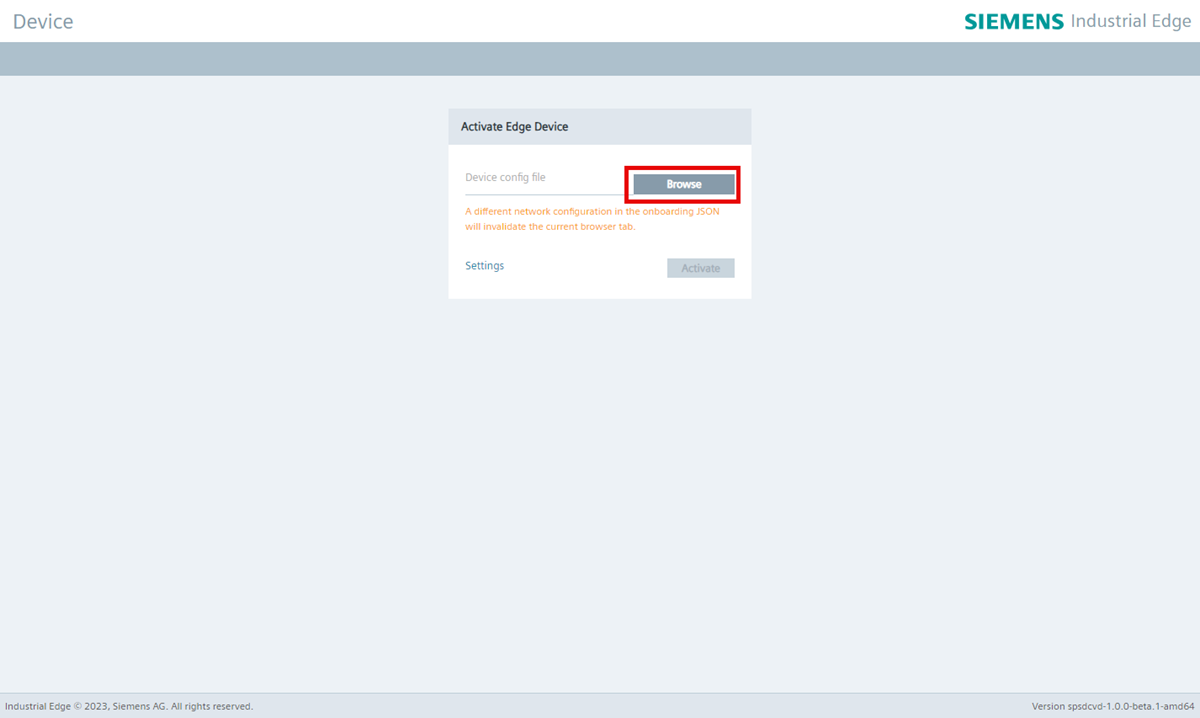
-
Select the configuration file downloaded previously.
-
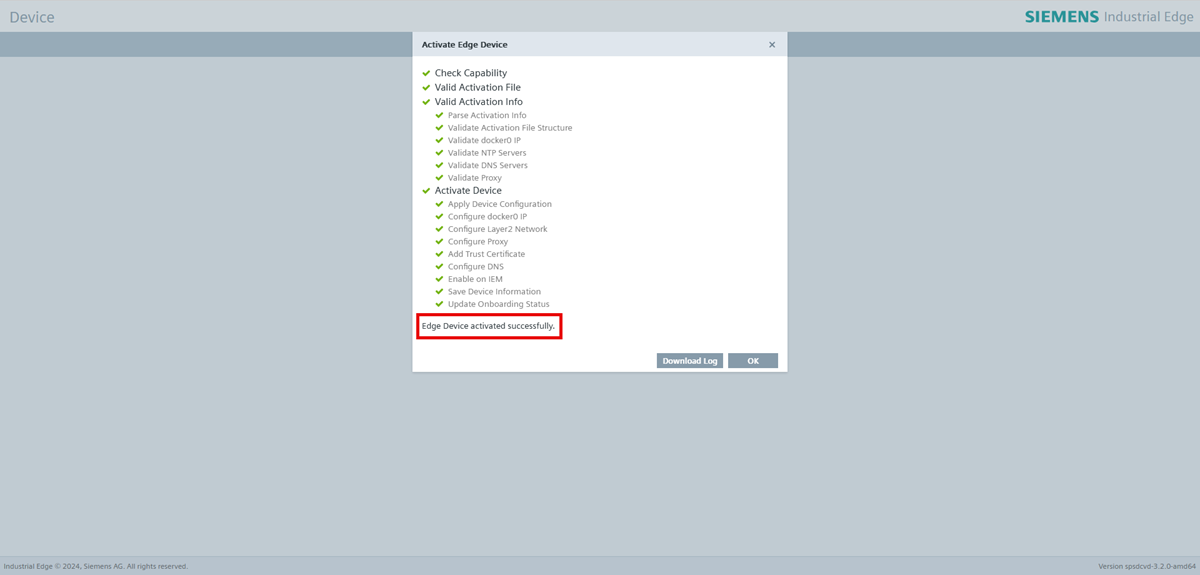
Click "Activate". The onboarding process begins and the screen displays a progress list. The orange "Maintenance" LED and the green "Running" LED on the IE Device flash during the onboarding process.
-
When the onboarding completes, the orange "Maintenance" LED stops flashing and the green "Running" LED turns solid. Click "OK". The screen displays the IE Device UI login screen.
-
Enter the login credentials previously defined in the configuration file. The IE Device logs in.
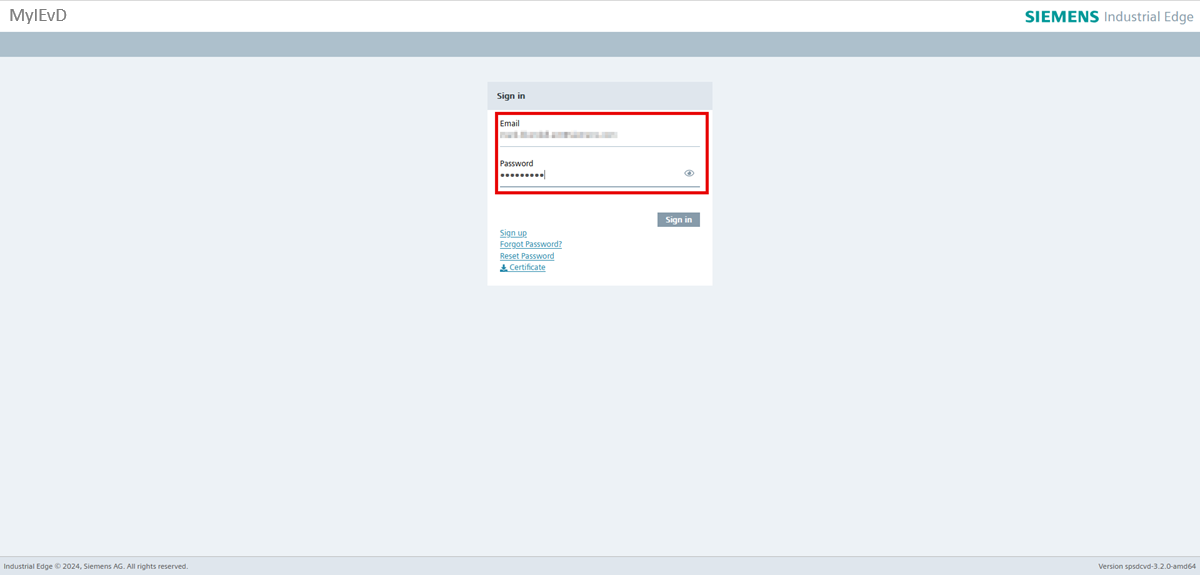
You are now logged in to the device UI and the onboarding process is finished. Proceed to Validating the outcome.
Onboarding a physical IE Device via a USB stick
Use this method only when a static IP address is required or you have no access to the UI. Otherwise, onboarding via the device UI is more convenient.
- Insert a blank USB stick into your local computer.
-
Create a new partition on the USB stick called
USBONBOARD.NOTICE
For a detailed description of how to create the partition, refer to Chapter 4 of SIMATIC IPC Industrial Edge Device.
-
Add the configuration file to the partition.
- Eject the USB stick.
- When the green "Running" LED on the IE Device flashes, insert the USB stick into the USB port.
- The onboarding process starts immediately. The orange "Maintenance" LED and the green "Running" LED on the IE Device flash during the onboarding process.
- When the onboarding completes, the orange "Maintenance" LED stops flashing and the green "Running" LED turns solid.
- Remove the USB stick from the IE Device.
- Enter the IP address of the IE Device with the HTTPS protocol, i.e.
https://<ip address>. The browser may display the "Your connection isn't private" warning page as the IE Device uses a self-signed certificates for the UI. -
Click "Advanced". The screen displays a warning about the server's security certificate.
-
Click "Continue to XXX.XXX.XX.XXX (unsafe)". The screen displays the IE Device UI login screen.
-
Enter the login credentials previously defined in the configuration file. The IE Device logs in.
You are now logged in to the device UI and the onboarding process is finished. Proceed to Validating the outcome.
Validating the outcome
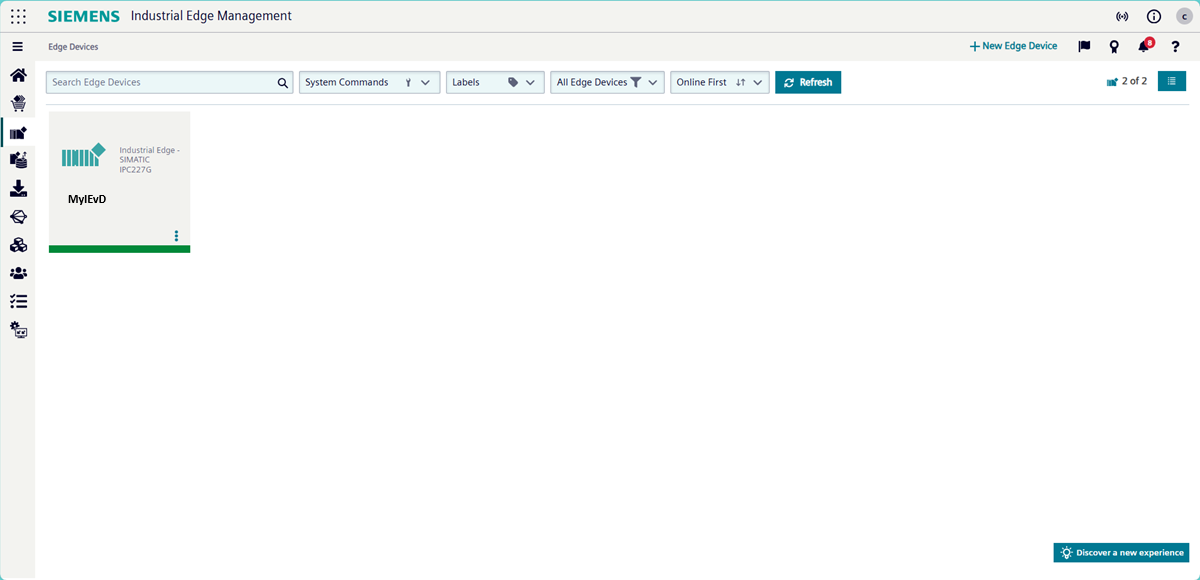
If you can log in to the device, the onboarding process was successful. To confirm a successful onboarding process, open IEM and click "Edge Devices". The onboarded IE Device appears with a green bar to indicate it is online.
More information
Refer to the Industrial Edge documentation for more information about managing the onboarded IE Device.
Proceed to Getting started with IE Apps.
Onboarding a Industrial Edge Virtual Device
Virtual IE Devices offers the functionality of an IE Device without the need of dedicated physical hardware devices.
This tutorial uses the Industrial Edge Virtual Device to illustrate how to onboard a IE Virtual Device.
Prerequisites for onboarding a IE Virtual Device
Software requirements
- You have IE Hub Access.
- You have configured your IEM.
-
You have a Hypervisor software (multiple on one device can cause issues): Hyper-V or VMWare
-
Hyper-V.
- You have Administrative rights on the Hyper‑V host
- You have a Tool to extract
.xz(Linuxxz/tar, or Windows tools such as 7‑Zip)
NOTICE
Follow official Microsoft instructions: Enable Hyper-V on Windows
Optional quick PowerShell (run elevated) example for Windows Server / Pro editions:
Enable-WindowsOptionalFeature -Online -FeatureName Microsoft-Hyper-V -All -NoRestartReboot the host if Hyper‑V was newly enabled.
-
VMWare Workstation Player 17 or VMware Workstation Pro 17 or later
-
-
An existing network setup
- IP plan ready (static or static through DHCP)
- Recommendations:
- Use a provided DNS server for name resolution.
- Use a provided NTP server for time synchronization.
-
External virtual switch configured (recommended). Internal switch only for advanced routing/NAT setups.
Creating a NAT Switch on Hyper‑V Manager
For official guidance, consult the Microsoft Hyper‑V documentation on virtual switches and NAT configuration. For a practical community walkthrough, see this Stack Exchange thread.
-
You have purchased a IE Virtual Device License - Find information about the purchase process
-
A computer for the virtual machine
Recommended virtual machine requirements
To ensure the best result Siemens recommends providing the following resources for the virtual machine:
- 4 virtual CPU cores
- 8 GB RAM
- 128 GB virtual disk space
Obtaining an IE Virtual Device
To obtain the IE Virtual Device, download the install-*.tar.gz-file containing all supported Hypervisor deployments from the Industrial Edge Hub (IEH). The deployment files contains the virtual machine image used to create the IE Virtual Device.
-
Select the following link and login to your prior purchased IEH account: Download of Industrial Virtual Device
-
Select the Download Button to receive the
install-*.tar.gz-file from the Library Section: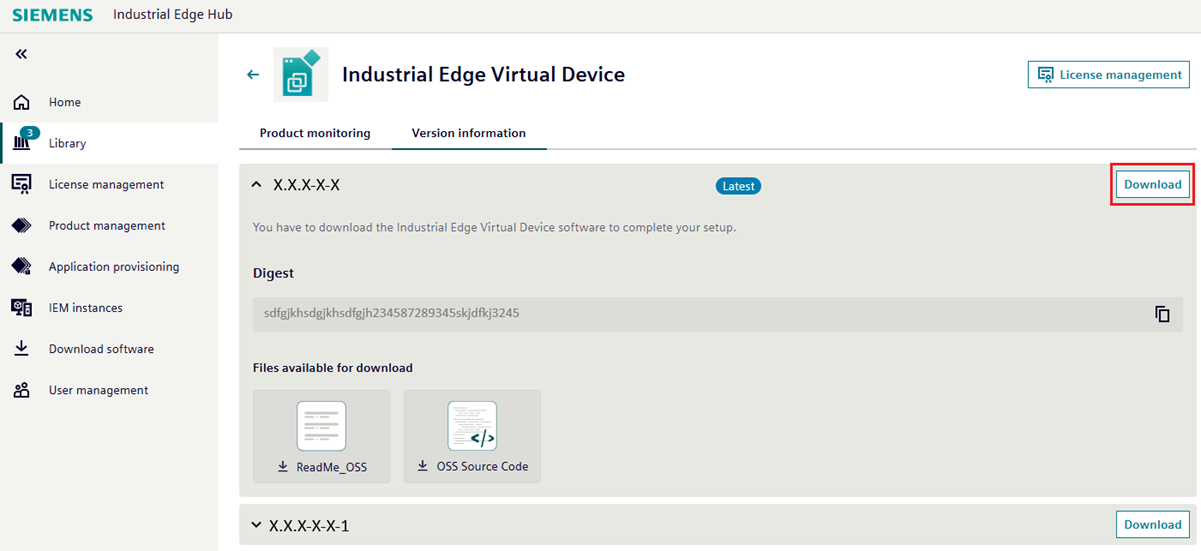
-
Right-click the file and choose your preferred extraction tool to extract its contents.
The folder contains all supported hypervisor files.
Creating the virtual machine
Depending on the Hypervisor Software, conditional steps must be executed.
Conditional steps
Creating the virtual machine
-
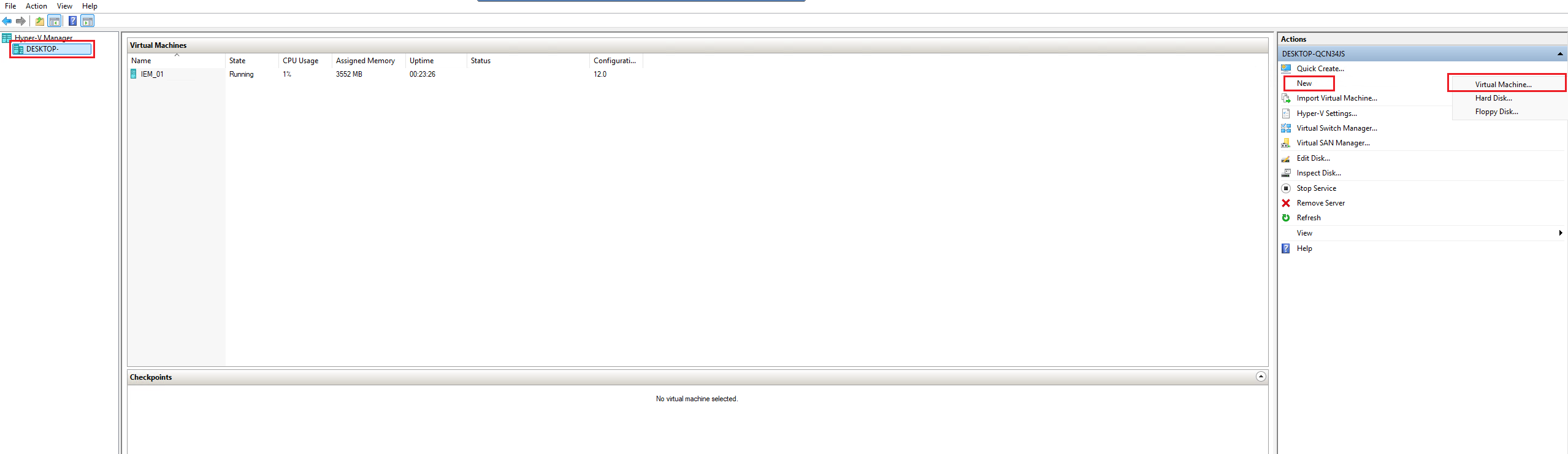
Right-click "New" in the upper-right pane and select "Virtual Machine...".
-
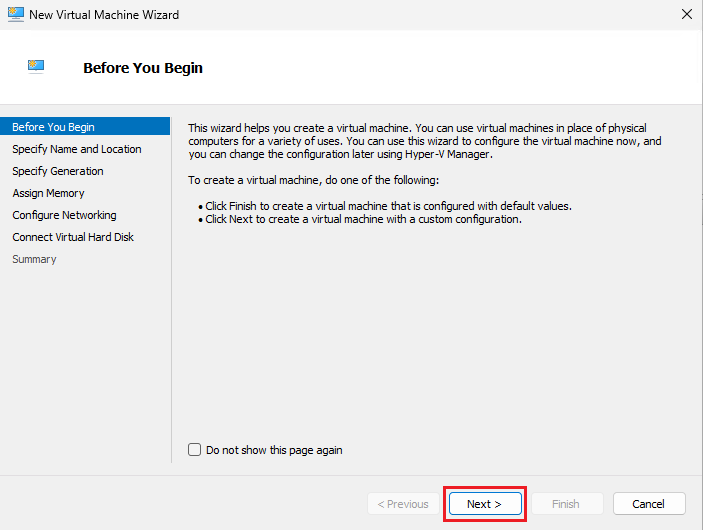
In the "New Virtual Machine Wizard" click "Next".
-
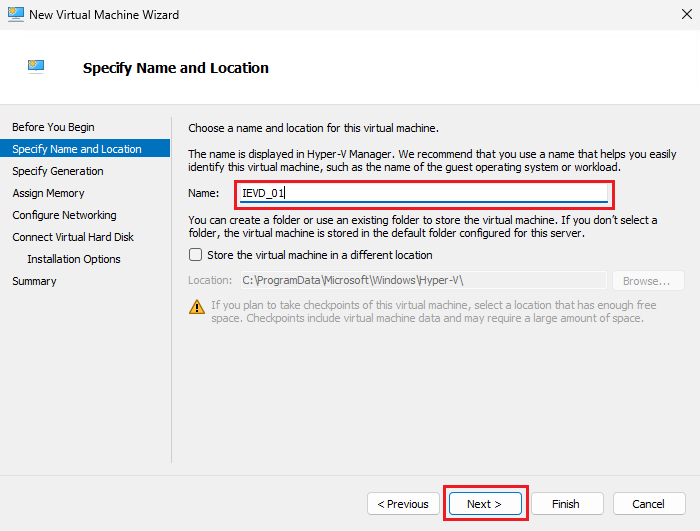
Enter a name for the virtual machine and optionally change the default store path. Click "Next".
-
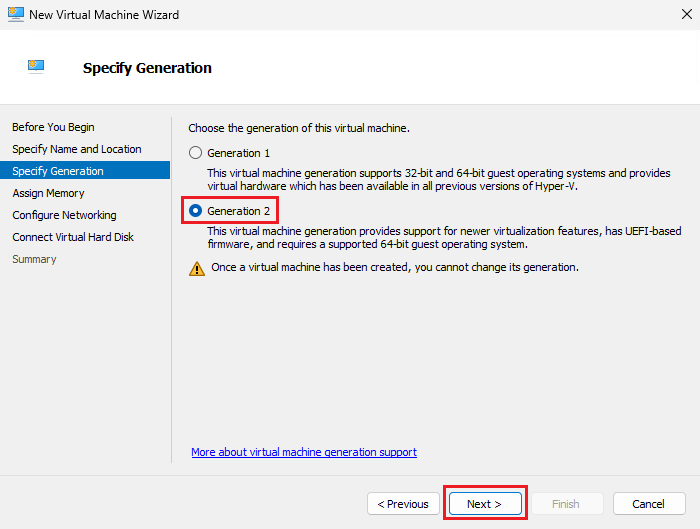
Select "Generation 2". Click "Next".
-
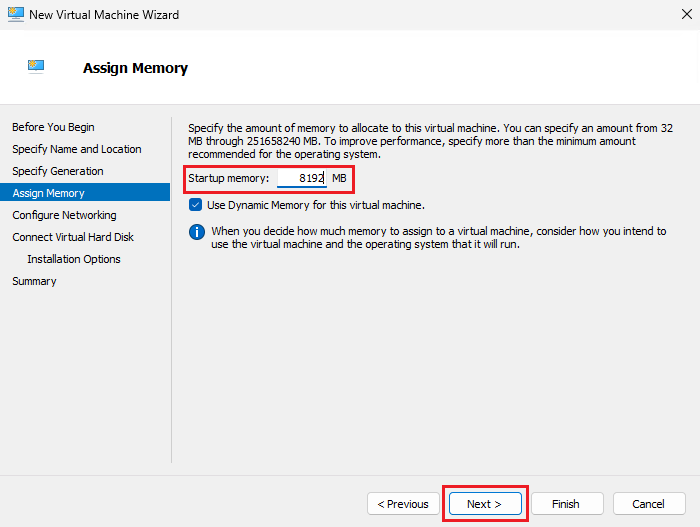
Enter the amount of memory to allocate (see prerequisites for minimum requirements) and click "Next".
-
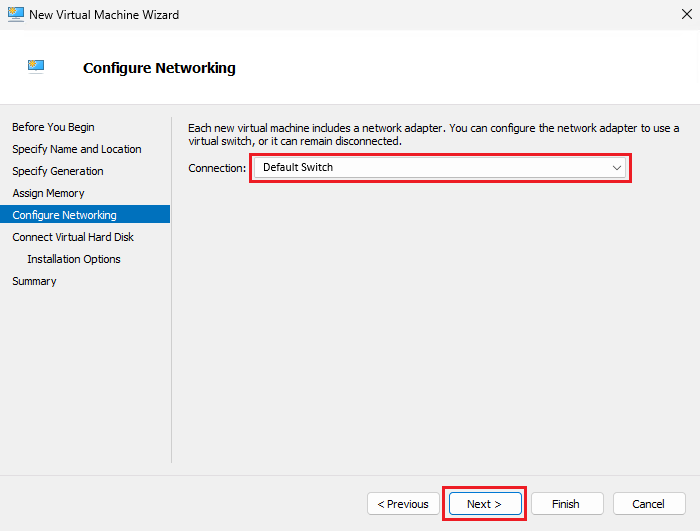
Choose a virtual switch according to your network setup (this guide uses the "Default Switch"). Click "Next".
Choosing the Right Virtual Switch
The Default Switch relies on NAT and dynamic addressing and is unsuitable for production stability. An Internal switch is viable only when you will manually provide routing/NAT/DHCP from the host.
-
Select "Use an existing virtual hard disk", browse to the downloaded and extracted
install-*-folder and select the*.vhdx-file (under Hyper-V), and click "Next".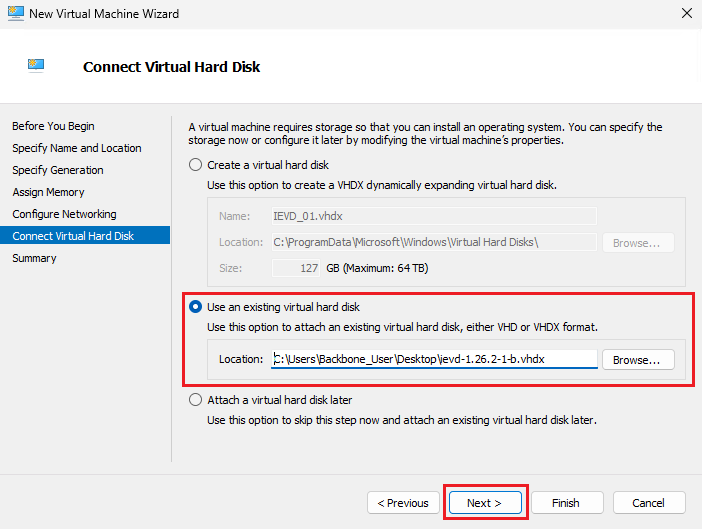
-
Review the configuration and click "Finish".
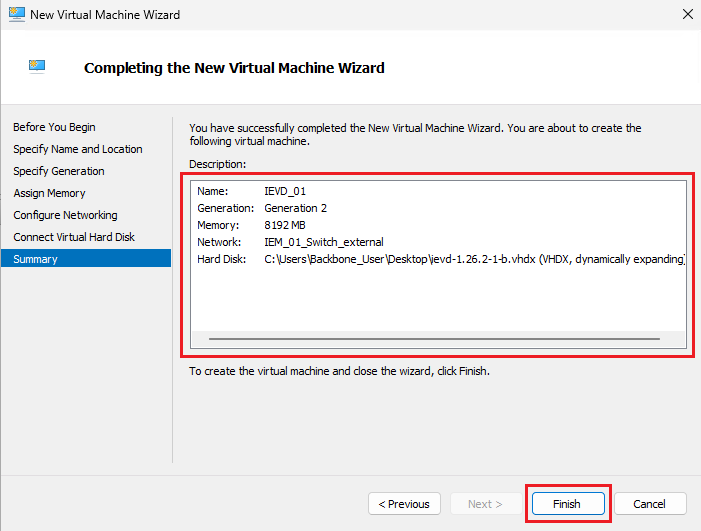
The virtual machine is created and appears under "Virtual Machines".
Configuring the VM settings
-
Select the previously created virtual machine and click the "Settings" button in the bottom-right pane.
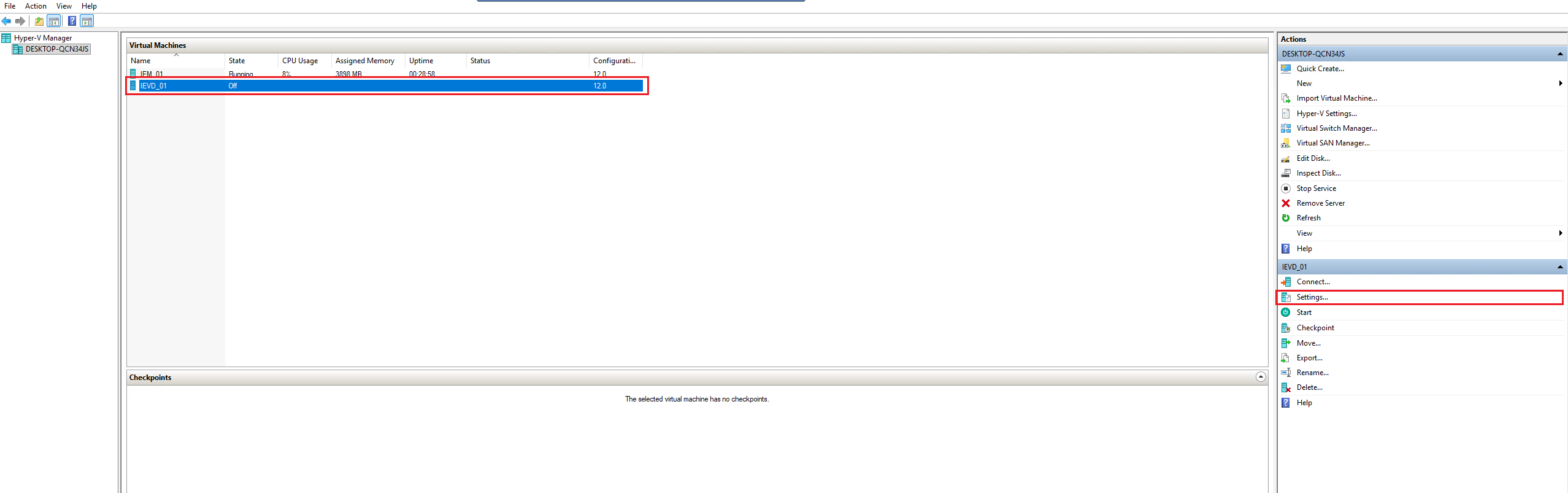
-
In the left pane select "Security" and uncheck "Enable Secure Boot".
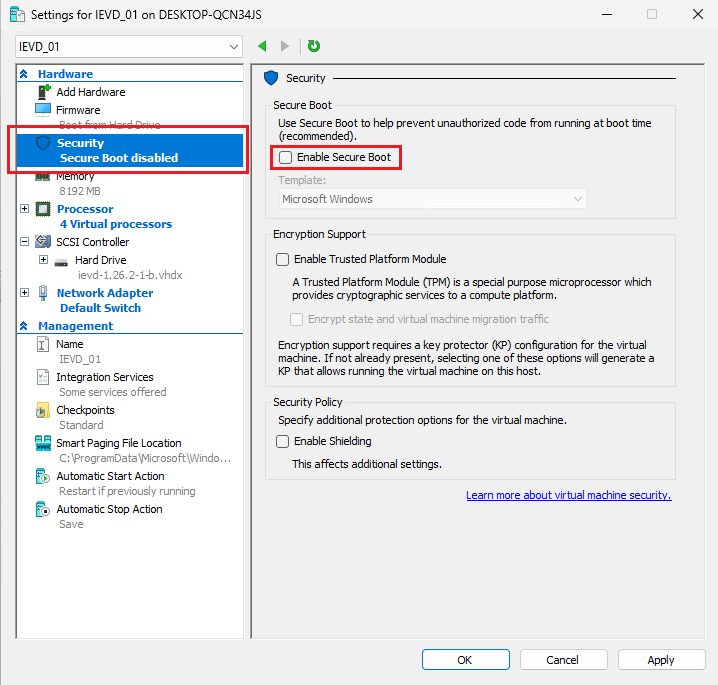
-
In the left pane select "Processor", set the number of processors (see prerequisites for minimum requirements), and click "Apply" and "OK".
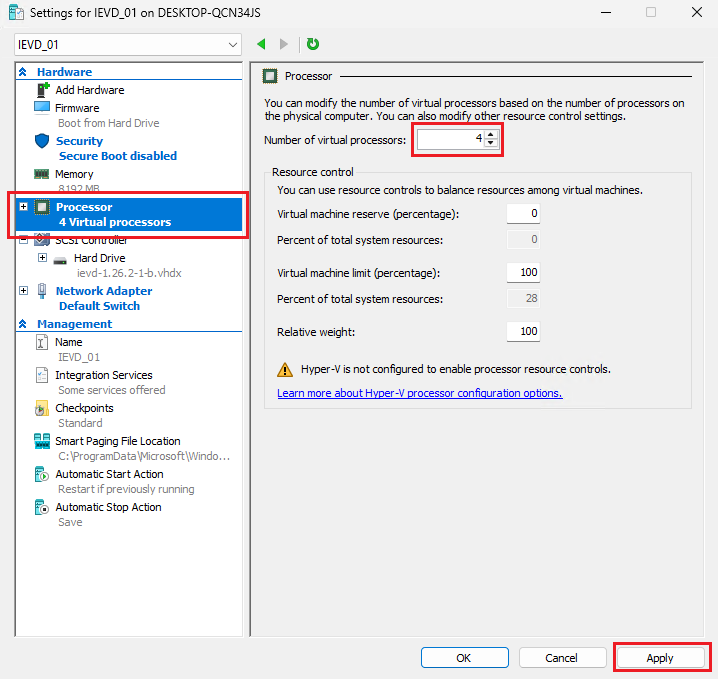
Booting the virtual machine and accessing the UI
-
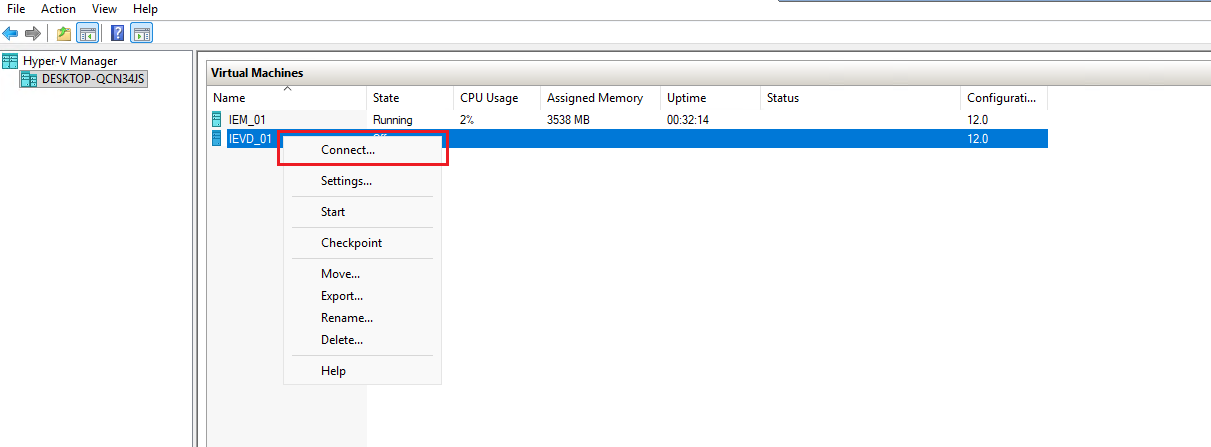
Right-click the virtual machine, select "Connect".
-
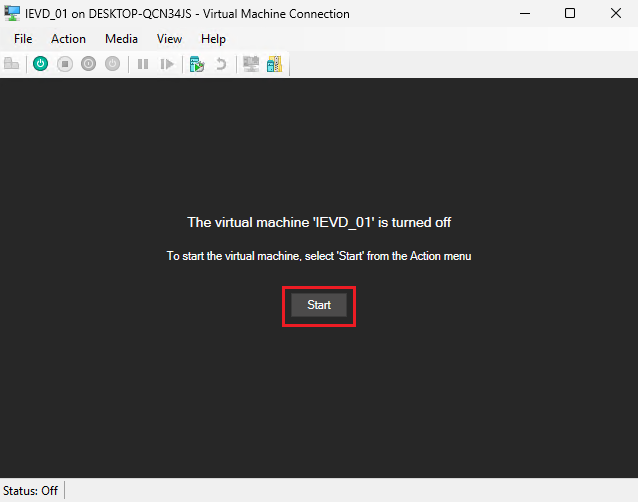
Click "Start" to boot the virtual machine.
-
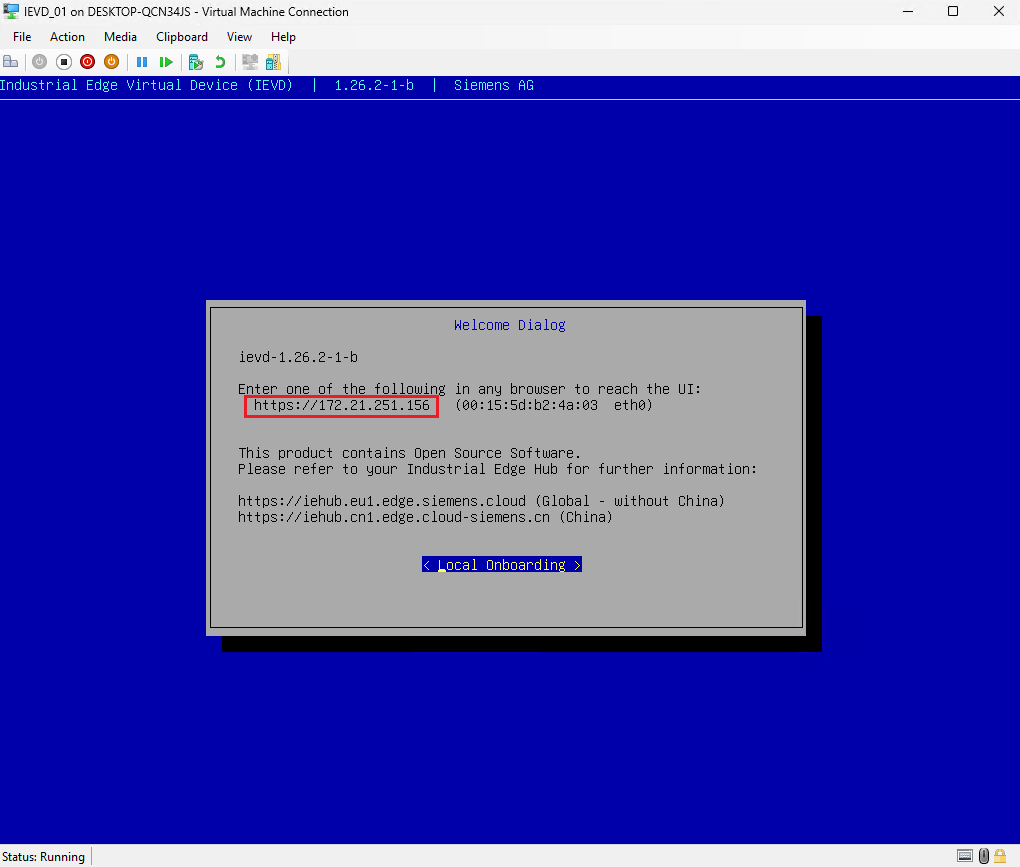
The virtual machine's console display appears. Note the shown IP address and use it in a browser to continue with the setup.
Static IP Configuration
If there is no DHCP server available in your environment, configure a static IP address from the console so you can access the First Boot Wizard for further configurations. Proceed with Initial Network Configuration to set up a static IP address or refer to the onboarding via Stick section.
NOTICE
Do not reduce CPU/RAM during onboarding period.
Importing the Virtual Machine
- Open VMware Workstation.
-
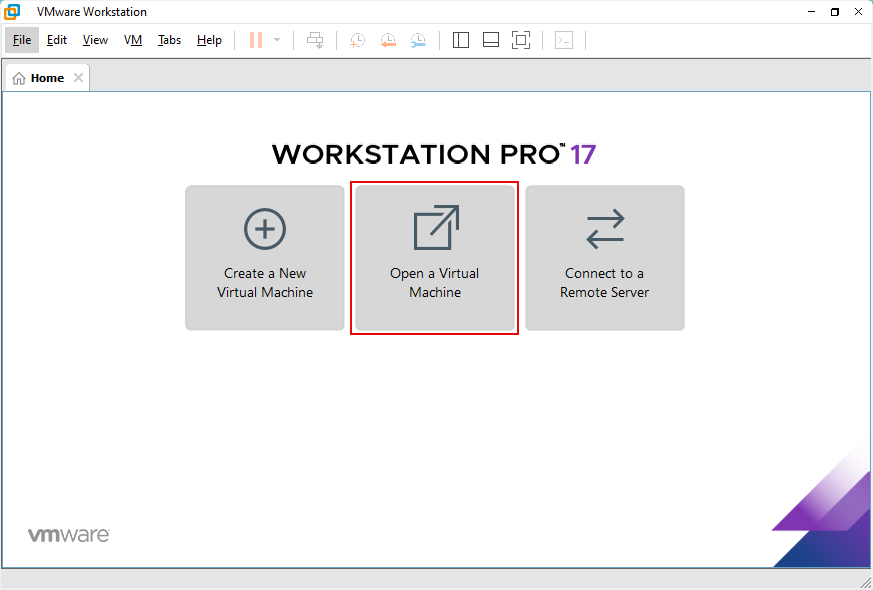
Click "Open a Virtual Machine".
-
Select the .ova deployment file downloaded from IE Hub.
- Name your virtual machine.
- Select a storage path.
-
Click "Import". VMware creates the virtual machine.
**Connecting the IE Virtual Device to the IEM instance**

Once the virtual machine is created, connect the IE Virtual Device to the IEM instance.

1. Plug in the Ethernet cable into the computer where the IE Virtual Device is running.
2. Establish a network connection between the IEM and IE Device.
3. Open VMware.
4. Navigate to the virtual machine created in [Creating the virtual machine with a deployment file](#obtaining-a-ie-virtual-device).
5. Click "Power on this Virtual Machine". The virtual machine boots up.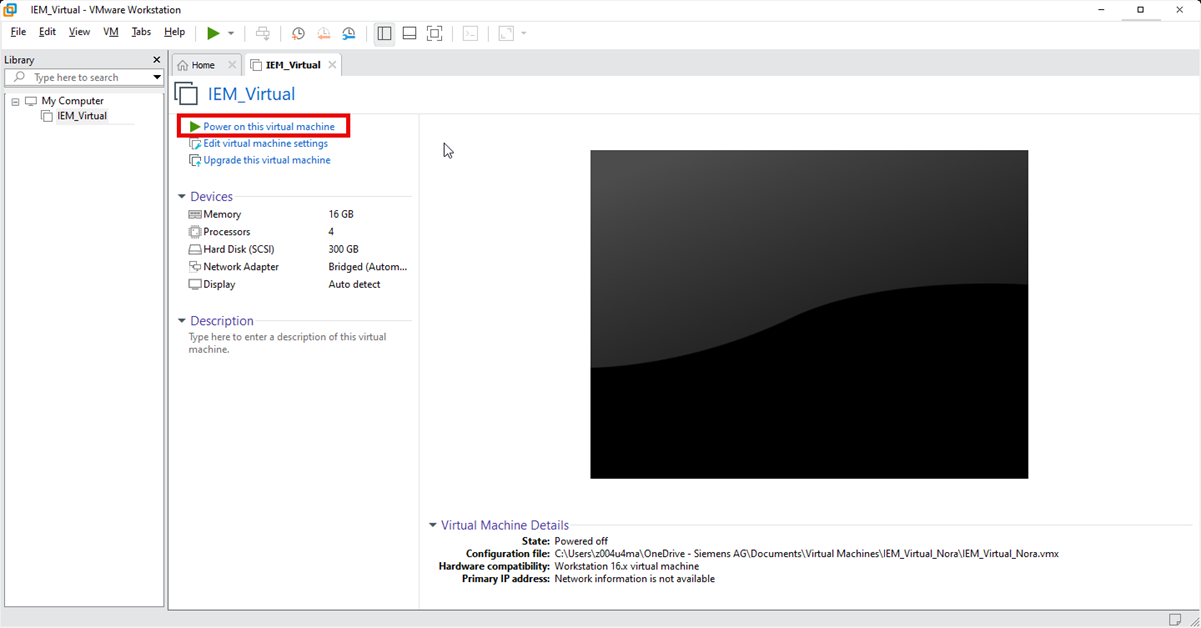
-
When the IE Device finishes booting up, the screen displays the IE Device's IP address. Note down the IP address. The DHCP on your network determines the IP address.
 !!! info "Static IP Configuration" If there is no DHCP server available in your environment, configure a static IP address from the console so you can access the **First Boot Wizard** for further configurations. Proceed with [Initial Network Configuration](03_get_started_ie_management.md#defining-a-static-ip-address) to set up a static IP address or refer to the [onboarding via Stick section](#onboarding-a-physical-ie-device-via-a-usb-stick).
Creating the configuration file for a IE Virtual Device
IE Devices require a configuration file from the Industrial Edge Management instance for the onboarding process. This procedure is similar for IEM Cloud, IEM Virtual, and IEM Pro.
- On computer where the IE Virtual Device is running, open Industrial Edge Management.
- If required, log in.
-
In the left navigation panel, click "Edge Devices". The "Edge Devices" page opens.
-
Click "+ New Edge Device". The "New Edge Device" pop-up opens.
-
Define the following information:
Field Input Edge Device Type Select Industrial Edge Virtual Device.Edge Device Name Enter a unique device name.
The device name must be 3–64 characters long and can only contain alphanumeric characters and.,+,-and_
In our example, we have enteredMyIEvD.Edge Device Username (Email) Enter the email address that should be used to log in to the device. Edge Device Password Enter the password that should be used to log in to the device.
Password must be at least 8 characters long and contain at least one capital letter, special character, and number.Credentials cannot be recovered
Note down the credentials or store them in a password manager.
-
Click "Next". The "Network Interface" page opens. For DHCP, no interface must be created. If you want to use a static ip address, add an interface.
-
The network configuration includes setting a Network Time Protocol (NTP) server. The NTP server is responsible for time synchronization. In the "NTP Server (Optional)" field, enter your network's NTP server or use a public one such as
pool.ntp.org. Click the "+" button. Once done, click "Next". The "Proxy" page opens. -
If needed, specify the configuration for your proxy. If you do not have a proxy, leave the fields blank.
-
Click "Create". The configuration file downloads according to your browser settings. The configuration file follows the naming convention of
device-<deviceID>.Valid for one hour (default)
The configuration file is per default only valid for one hour. After one hour, the file corrupts and you must download a new configuration file.
-
The "New Edge Device" pop-up closes and IEM displays the "Edge Devices" page with the new IE Device listed.
Once the configuration file downloads, proceed directly to:
Onboarding the IE Virtual Device via web browser
- Open the web browser on your local computer.
-
Enter the IP address of the IE device with the HTTPS protocol, i.e.
https://<ip address>. The browser may display the "Your connection isn't private" warning page as the IE Device uses a self-signed certificates for the UI. -
Click "Advanced". The screen displays a warning about the server's security certificate.
- Click "Continue to XXX.XXX.XX.XXX (unsafe)". The IE Device UI displays the "Activate Edge Device" page.
-
To onboard the IE Device, click "Browse".
-
Select the configuration file downloaded previously.
-
Click "Activate". The onboarding process begins and the screen displays a progress list.
-
Once the onboarding completes Click "OK". The screen displays the IE Device UI login screen.
-
Enter the login credentials previously defined in the configuration file. The IE Device logs in.
You are now logged into the device's UI and the onboarding process is finished.
Validating the outcome
If you can log in to the device, the onboarding process was successful. To confirm a successful onboarding process, open IEM and click "Edge Devices". The onboarded IE Device appears with a green bar to indicate it is online.
More information
Refer to the Industrial Edge documentation for more information about managing the onboarded IE Device.
What's next?
After setting up your IE Device, proceed to Setting up IE Apps.